คำค้นยอดฮิต: ข้าวเหนียวมะม่วง ของขวัญออแกนิค ผลไม้สด
TH | EN
฿ 0.00
Dong Muang Toei Ancient City
Sub district Song Pueai District Kham Khuean Kaeo Province Yasothon 35110
Image
Image
Image
Image
Weather
Closed
Business hours
• Sunday
: 09:00 - 16:00
• Monday
: 09:00 - 16:00
• Tuesday
: 09:00 - 16:00
• Wednesday
: 09:00 - 16:00
• Thursday
: 09:00 - 16:00
• Friday
: 09:00 - 16:00
• Saturday
: 09:00 - 16:00
Note
: -
Review Score
0
Availability
0
Value
0
Service
0
Read more >
Information
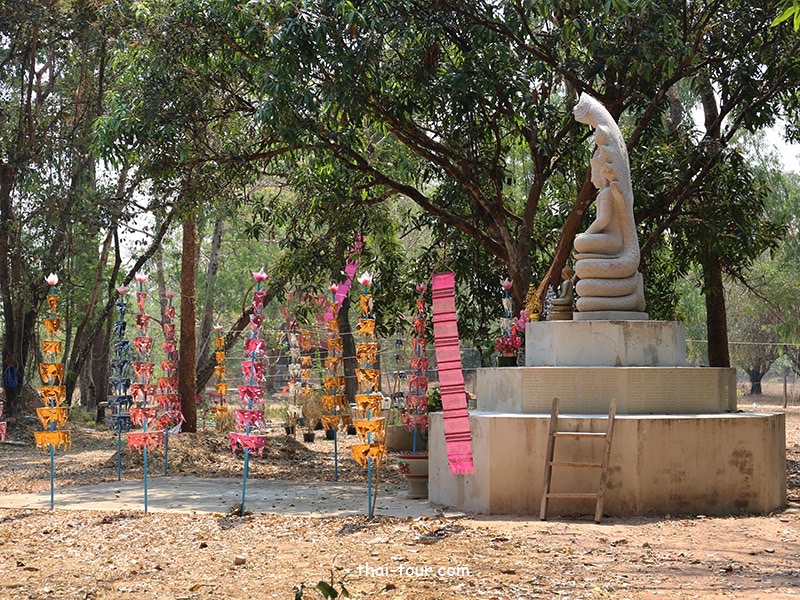
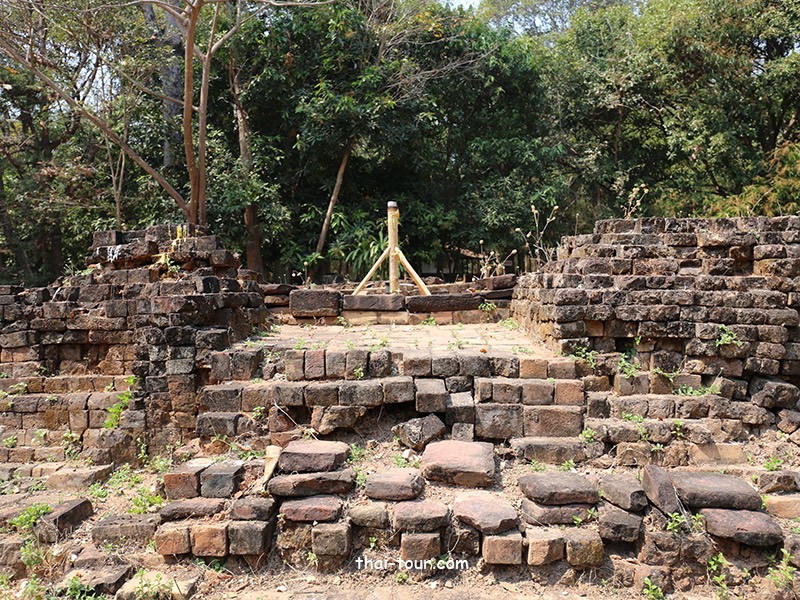
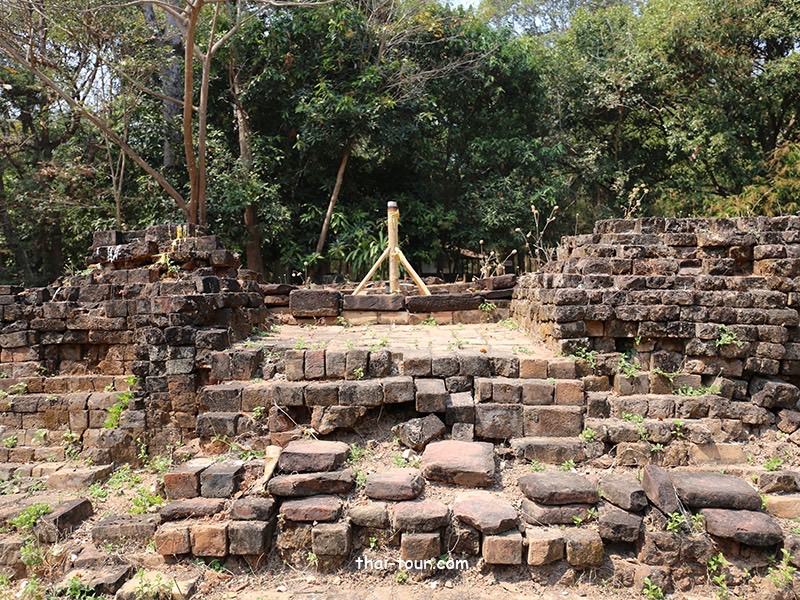
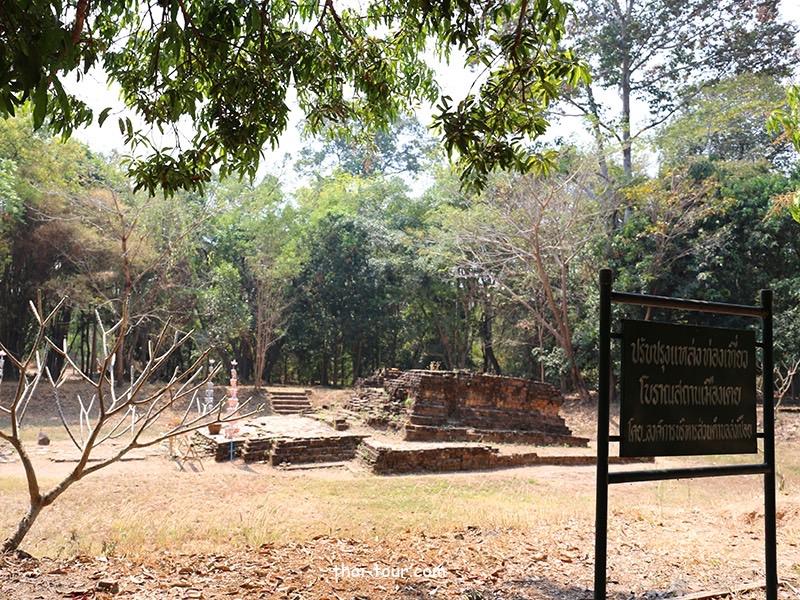
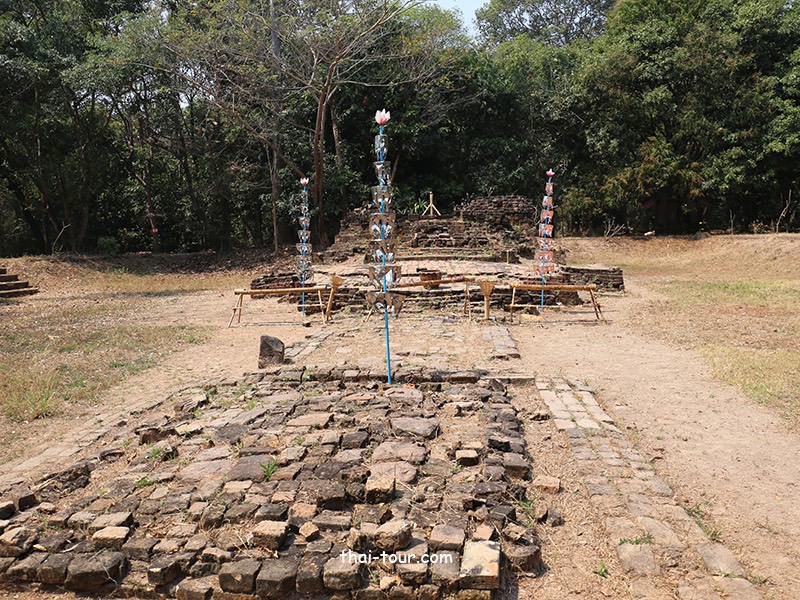
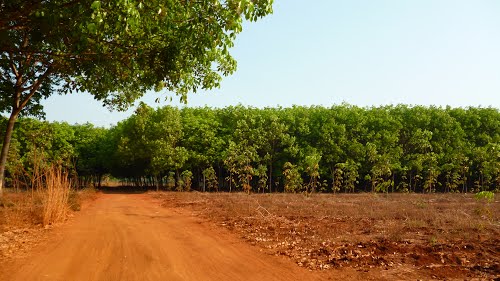
Dong Muang Toei is the old city of the Khmer period. No one knows when it has been an abandoned city for how long. The condition seen from many generations of great-grandparents; Dong Muang Toei has high forests with transparent in the bottom ground. There were some small trees and the big trees are rubber trees, tabaek trees, and Yang Hiang trees. It is a very dense forest. The parents and grandparents did not dare to cut down the trees in this grove because Dong Muang Toei has a fierce ghost called the Ghost of Grandfather. The forest is the habitat of monkeys and many birds. The marsh around Dong Muang Toei is a deep swamp with water all year round. It is a habitat and a natural breeding ground for fish. In addition to birds and this swamp is known to have the most turtles. The reason there are so many turtles, the villagers worship the spirits of their grandfathers. Grandfather forbids anyone to eat and destroy his animals, monkeys and turtles, and if they cause harm, they shall be punished accordingly.


Later, about 90 years ago, Song Puei villagers had a shaman who studied sorcery to perform a ceremony to defeat the ghosts of Muang Toei. This sorcerer's name is Elder Suwo. This incident coincides with the reign of Father Yai Agrahad. It was the eyes of the light when villagers near and far heard the news that Father Yai Suwo had defeated the Phi Dong Muang Toei. They flocked to catch fish turtles from Muang Toei for food until they almost cleared the swamp. So turtles are almost extinct until now. Father Yai Suwo has shared the swamp as a land for brothers and sisters to cultivate until today. As for Dong Muang Toei, the area has been divided into farming, gardening, and growing crops as much as today. This is true Elderly people who have reached 90 years of age, such as Father Yai, light scent, Father Big Bu Kokpuei, are still alive as witnesses.
Source
Thailand Tourism Directory
Recommended
Group of tourist
• MICE / Study Visit
• Arts & Culture / History
Transportation
• Car
Entrance fees
• Entrance fees: Non-fee
• Remark : -
Facilities
Parking lot
Toilet
Review (0)
0
จาก 5.0
Availability
Value
Service
Relate Agritourism
This trip is very suitable because we only bring a few hundred baht per person, and still can enjoy a vacation that is happy and fun like this. It is a trip near to Saraburi, with a waterfront accommodation at a price of few hundreds Baht; it is named "Yai Eid Riverside Garden". Although the price is cheap like this, the atmosphere is really rich. The highlight of this place is the emerald river, which is very beautiful because the water is so clear. It's a really beautiful emerald green color where tourists can swim together and enjoy.
Saraburi
1. Form of activity: see and study the production process of jasmine rice, volcanic soil, weave mat demonstrate, fabric dyeing from soil at Ba Rai holy well. Sightseeing plant herb production area and herbal processing, buy some souvenir or product and agricultural goods, OTOP center. You can try yummy food in KhanToke style and see Apsara Dance, see view by bicycle, take a rest at homestay, visit rural market in the morning. 2. The way of community: cultivation, southern east livelihood, traces of Khmer civilization. 3. The Participation of tourist: tour, taste, shopping, snap, share, do and learn agricultural station. Tourism Program 2 days 1 night Frst day, Check in at the accommodation, rent some bicycle, see how to produce volcanic jasmine rice station, see how to plant vegetable and herbal processing, having lunch at Baray reservoir. Afterwards, visiting at Mueang Tum Ruin, see around the community by bicycle in the evening then make some traditional dinner at homestay (KhanToke style and see Apsara dance but it is depend on coustomer's demand because it is an extra charge), lie down at homestay. Day 2 Visit morning rural market, give food to the monks, have a meal at homestay, weave mat demonstrate and fabric dyeing from soil at Ba Rai holy well, weave fabric as Paco Fern pattern (Pak Krood) and buy some silk fabric with Pak Krood pattern at The OTOP center, go up the hill to visit Khao Phanom Rung National Park The route that linking with the others tourist attraction 1. Mueang Tum Ruin distance 500 meters. 2. PhanomRung Historical Park distance 5 kilometers. 3. Phu Akkanee Dye Fabric group distance 23 kilometers. 4. Wat Khao Ang-Karn Chaloem Phra Kiat district distance 25 kilometers
Buri Ram
Sufficiency Economy Philosophy House is a learning center of the new agriculture theory. Inside the integrated garden, is planting vegetables for household consumption adhering to the sufficiency economy philosophy of King Rama IX. It is also the pilot model of growing rice berry in the 400 plastic tanks that results in the 20 tanks of paddy, which is sufficient for consumption all year round. Later, numbers of villagers and foreigners visit this place. The lecturer is available to provide knowledge about the SEP to the students and interested people.
Chumphon
It is organized as a learning point station in a systematic way such as 1.1. Orchid seed service station and an orchid seed room 1.2. Planting station for various orchid species and increasing the value of orchids 1.3. Ornamental plant planting and propagation station 1.4. Biological production (Trichoderma Beauveria BT), composting does not return to the pile of Mae Jo formula. 1.5. Earthworm, cricket and sloping station 1.6. Hydroponics and Sky Vegetable Planting Station 1.7. Various types of mushroom cultivation stations 1.8. Plant seedling cultivation station and food processing from mushrooms 1.9. Different types of fruit plant propagation stations 1.10. Integrated Agricultural Station according to the Sufficiency Economy Philosophy (can be adjusted as appropriate)
Samut Sakhon
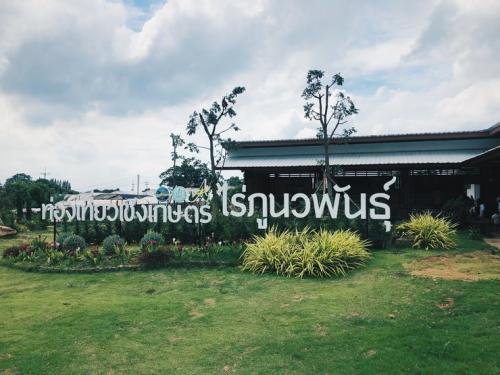
Phu Nawaphan Vineyard It is a vineyard with processed products of grapes, grapes, grape juice, etc.
Saraburi
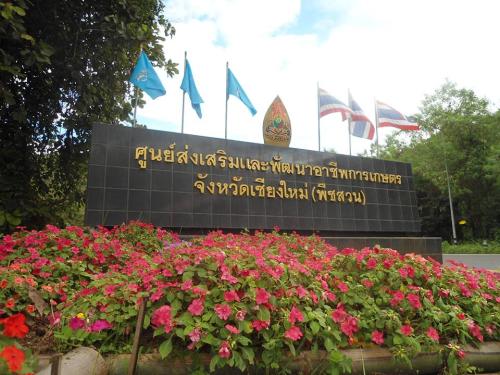
"...Taste the tea......Chiangda vegetable tea produced in the center. ...see the garden...see the plots to learn about agriculture Flowering plants - ornamental plants, fruit trees - perennial plants, sufficiency economy, vegetable and herb plants, economic insects, check dams, rare plant collection plots, natural check-in points, nature walks, watershed viewing, viewing Local birds...etc. ...invite to shop...agricultural products of the Farmer Network group at the sales point in front of the center. Tourism program : 1 day trip inside the center 2 days 1 night trip..with other nearby attractions Route links to other attractions: '- Ban Tai Lue, Ban Luang Tai Distance before reaching the center 7 km. - Sri Mung Muang Temple Distance before reaching the center 7 km. - Wat Phra That Doi Saket Distance before reaching the center 7 km. - Nong Bua Phra Chao Luang Distance before reaching the center 5 km. Suspension bridge Mae Kuang Udom Thara Distance before reaching the center 10 km. - Doi Saket Hot Spring Distance from the center 9 km. - Huai Hong Krai Royal Development Study Center The distance from the center is about 4 km. - Royal Initiative Project, Agricultural Learning Center, Demonstration Field, 85 Rai The distance from the center is about 7 km."
Chiang Mai
Promoting and supporting agricultural occupations of Sakhu sub-district
Phuket
1 agricultural learning ground of Ban Na Nam Sam, 10 grounds as follow: 1) Learning ground for the production of bio-based substances (Trichoderma, Beauveria, BT, wild microorganisms, nematodes) 2) Charcoal/Wood Vinegar Distillation Learning Ground 3) Local egg raising ground 4) Mushroom cultivation ground 5) Organic Asparagus Planting ground 6) Freshwater fish farming ground 7) The composting ground 8) Herbal Refinery Ground 2 Study natural attractions 1) Pha Nam Thip Cave Sacred water from nature 2) Bat Cave, discover the natural wonders of millions of bats. 3) Chompoo Cave 4) Wat Khao Sam Yot 5) Tad Fa Waterfall 6) Tad Tao water 7) Phu Ta Lor Cave 8) Dong Sakran Viewpoint 9) Dong Lan Forest Development Project 3 agricultural learning resources 1) Growing Asparagus 2) Planting and propagating guava 3) Longan orchard generates income 4) Mushroom cultivation for additional income tourism program 2 days 1 night program Learn about agriculture at 1-2 ground center > have lunch > visit Pha Nam Thip Cave > watch bats > have dinner > relax at homestay / Phu Pha Man Camp > Asparagus plot > Golden banana plantation > Khao Temple Sam Yot > have lunch > go back Note – Tour programs and service fees may change as appropriate. - 3 snacks 1 day program Learn about agriculture at center 1-2 bases > have lunch > visit Pha Nam Thip Cave > watch bats > go back Note – Tour programs and service fees may change as appropriate. - 2 snacks Route links with other attractions (with distance/km) 1) Pha Nam Thip Cave Sacred water source from nature, a distance of 3 km. 2) Bat Cave, a distance of 6 km. 3) Chompoo Cave, a distance of 4 km. 4) Wat Khao Sam Yot, a distance of 6 km. 5) Tad Fa Waterfall, a distance of 18 km. 6) Nam Phut Tat Tao, a distance of 12 km. 7) Phu Ta Lor Cave, a distance of 16 km. 8) Dong Sakran Viewpoint, a distance of 18 km. 9) Dong Lan Forest Development Project, a distance of 22 km. Community enterprise products in the community 1 Ban Son Tai Community Shop, Village No. 3, Ban Son Tai, Non Kom Subdistrict, selling Phu Pha Man folk clothes 2 Ban Non Kom Community Shops, Village No. 1, Ban Non Kom, Non Kom Subdistrict, selling local products and souvenirs.
Khon Kaen
It is an eco-tourism attraction with non-toxic vegetables, flowering plants
Chiang Rai
King Bhumibol Adulyadej (King Rama IX) foresaw the significance of plant genetic conservation prior to a recognition of the terms “Biological Diversity” and “Conservation” in Thailand. During the trip to Klai Kang Won Palace, A. Hua Hin, Prachuap Khiri Khan Province in 1960, he passed through A. Tha Yang, Phetchaburi Province and noticed many Yang Na trees (Dipterocarpus alatus). Therefore, he had royal words to collect the seeds to plant at Phra Tamnak Piam Suk, Klai Kang Won Palace, and grow the seedlings at Royal Chitralada Projects to study. In 1985, King Rama IX gave a royal word to conserve jackfruit tress around the Grand Palace and initiated the plant conservation project in the palaces by tissue culture. Later in 1986, he had the royal idea to conserve and breed rattan palms and arrange the herbal garden in Royal Chitralada Projects area. Her Royal Highness Princess Maha Chari Sirindhorn carried on the plant conservation project by having the royal idea and asked Lord Chamberlain to carry out plant conservation project in June 1992, when the seed gene bank was formed, and study the preservation of non-industrial crops under the royal thought framework. In 1993, Mr. Sujin Phunikom, the Assistant Subdistrict Headman of Salui and Tha Sae District, Chumporn Province, and his group, cooperated with the Director of Ultra Products Co., Ltd. and the agriculturists in Chumporn Province to establish plant conservation project at the public area located at Moo.6, Salui District (presently Moo. 5 and 6, Salui District, and Moo.4 and 7, Song Phi Nong District). At the same time, the Royal Chitralada Projects was looking for the area to set up the Plant Genetic Conservation Project Under The Royal Initiative of Her Royal Highness Princess Maha Chari Sirindhorn. Subsequently, Royal Chitralada Projects represented by Professor Prachid Wamanont (the Consultant) and the team met with Chumporn Governor (Mr. Prayoon Promphan) to discuss about the project. The first five years, the project was named “Plant Conservation and Development Project Under The Royal Initiative of Her Royal Highness Princess Maha Chari Sirindhorn, Chumporn Province”. Chumporn Provincial Agricultural Extension proposed the project for the approval from Chumporn Governor and submit the project documents to the Director of Royal Chitralada Projects to respectfully inform to Her Royal Highness Princess Maha Chari Sirindhorn on 26 April 1993. Moreover, Plant Conservation and Development Project was integrated with the royal plant genetic conservation project, which Dr. Pisit Wora-urai was a Chairman. The executives meeting on 9 July 1997 had the resolution to change the project’s name from “Plant Conservation and Development Project Under The Royal Initiative of Her Royal Highness Princess Maha Chari Sirindhorn, Chumporn Province” to “Plant Genetic Conservation Project Under The Royal Initiative of Her Royal Highness Princess Maha Chari Sirindhorn”
Chumphon
It is an agricultural tourist attraction. Learning resource for reducing high production costs from the use of chemical fertilizers. Deteriorate health cause disease to human life, therefore change the concept of improving the quality of production and reduce production costs through integrated pest prevention.
Chai Nat