คำค้นยอดฮิต: ข้าวเหนียวมะม่วง ของขวัญออแกนิค ผลไม้สด
TH | EN
฿ 0.00
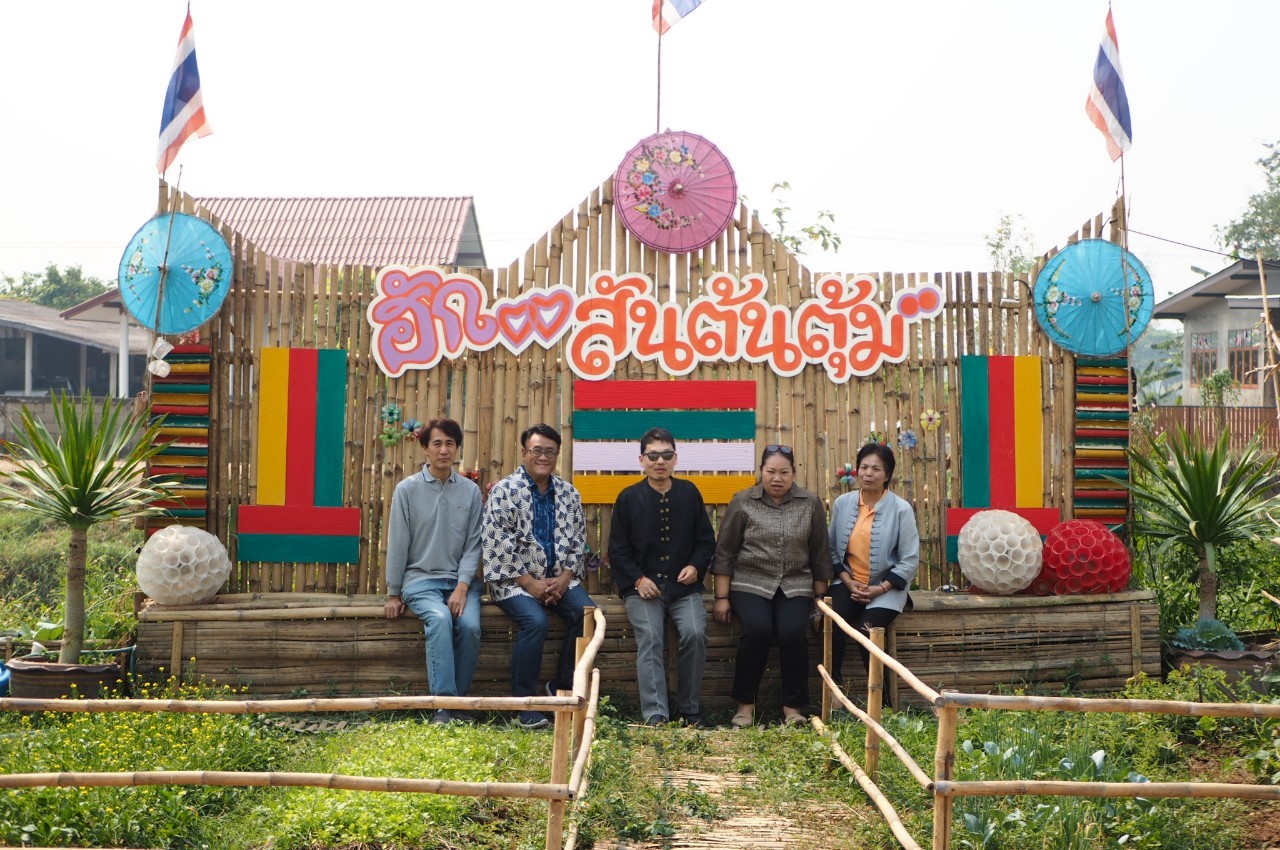
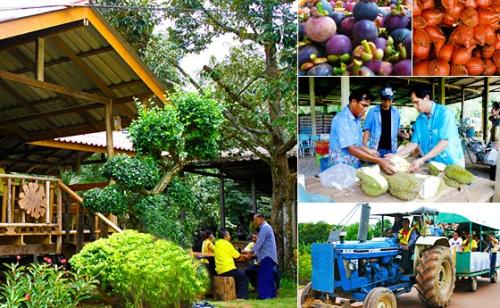
San Ton Tum Organic Village
Sub district Mae Ing District Mueang Phayao Province Phayao
Image
Weather
Open
Business hours
• Sunday
: 09:00 - 16:30
• Monday
: 09:00 - 16:30
• Tuesday
: 09:00 - 16:30
• Wednesday
: 09:00 - 16:30
• Thursday
: 09:00 - 16:30
• Friday
: 09:00 - 16:30
• Saturday
: 09:00 - 16:30
Note
: -
Review Score
0
Availability
0
Value
0
Service
0
Read more >
Information
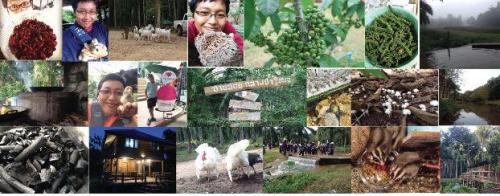
A village that grow organic vegetables. Visitors can come and learn how to compost from garbage, making compost from oyster snails, and cultivation of organic vegetables from the royal family of Chakphan Pensiri.
Able to visit every day.
Tel 08199896279
Source
Thailand Tourism Directory
Recommended
Entrance fees
• Entrance fees: Non-fee
• Remark : -
Review (0)
0
จาก 5.0
Availability
Value
Service
Relate Agritourism
Agricultural Occupational Promotion and Development Center, Chanthaburi Province: It is an agency of the Department of Agriculture Extension. It has duties to educate and practice agricultural careers for farmers and people who are interested. It is an agricultural tourist attraction and a study site for farming and economic insects, processing of bee products and stalks and agriculture in line with sufficiency economy. There are various learning spot within the center as follows: • Learning point for breed beekeeping • Learning point for honey beekeeping • Learning point for Steep beekeeping • Learning point for raising crickets • Learning Point for Bee Product Processing and honey bees • Learning point for agriculture based on the sufficiency economy (planting vegetables in containers Oyster Mushroom cultivation) Tour Program All year Route links with other attractions (with distance/km) • Chanthaburi Agricultural Research and Development Center (Thung Ple), 21 km. • Royal Initiative Fruit Tree Development Center, Chanthaburi, 24 km. • Office of Agricultural Research and Development, District 6, Chanthaburi, 25 km. • Khung Kraben Bay Development Study Center, 48 km. • Baan Pattawee Community Learning Center, 5 km. Community Enterprise Products: • Bee Honey • Stingless Honey • Processed products from bees and stingless bees (honey soap, herbal honey shampoo, herbal bee wax, Beeswax Lip Balm, Propolis Lotion Honey Cream)
Chanthaburi
Garden No. 1 Sala Hietuk Park: For those who love eating Salak; come here, and you will be delighted with the taste and the friendly nature of the owner of the garden. Sala Hietuk Garden offers a tour of the garden. See the way of life of the villagers and taste fruits. There are fresh fruits for you to buy and take home as well. Activities: Eat fruit (400 Baht/person), visit the garden, Learn about fruit garden and fresh fruits for sale Garden No. 2 Isaree Garden, Thai Horse Farm: it is suitable for family trip, a group of friends, or private trip Activities • Learn organic farming • Horse riding through the orchard • Ride a tram through the orchard • Learn soap making • Hippo therapy • Demonstration of durian processing, tasting durian chewing gum, cake • Eating fruit 400 Baht per person • Accommodation in a homestay Garden 3, Suan Wadi Activities: • Visit the garden • Eat fruit 400 Baht per person • Fresh fruit for sale Garden 4, Arun Burapha Park: this is a place to see the garden, taste the fruits and buy the products to take home. Come out and visit Wat Khao Sukim to see the beauty of Khao Sukim Temple Museum. • Biking around the garden • Learn how to process fruits such as fried durian, durian crackers • Learn how to plant and care for a durian garden • Eat fruit (400 Baht per person) Garden No. 5 Rinradee Park Activities • There are 3 rooms of hotel accommodation with breakfast for 10 persons (1 room for 2 people, 2 rooms for 4 people) • WiFi service • There is a security system with CCTV • There are activities for sightseeing, tasting, all-you-can-eat fruits, rambutan, durian, mangosteen, Langsat • There is a shuttle to take you on an adventure in the orchard. Go to see durian varieties, see Salak trees and take a walk in the orchard. • There is a playground, swings, merry-go-rounds, arched bridges • There are toilets for women, men and people with disabilities • On the viewpoint, you can see Khao Khitchakut, Khao Sukim, Khao Chab, Khao Luk Chang - Come see the windmills that generate electricity • Fruits and vegetables in the garden for sale such as rambutan, durian, mangosteen, Langsat at a cheap price Tour program: Visit the orchard, without eating fruit 50 Baht per person, Visit the orchard, and eat fruit 400 Baht per person Accommodation including breakfast For 2 people, price 990 Baht For 4 people, price 1,990 Baht Those who stay and eat fruit will be charged only 350 Baht per person from 400 Baht Travel calendar: accommodation, garden tour = all year Visit the garden / eat fruit = end of April - end of July or until the fruit runs out Products Crispy Durian Dried Durian Paste Pepper Fresh fruits: rambutan, mangosteen, Langsat, Durian Route links with other attractions (with distance/km) - Wat Khao Sukim, 8 kilometers - Chao Lao Beach, Tha Mai District, 25 kilometers - Krathing Waterfall, Khao Khitchakut District, 20 kilometers - City Pillar Shrine, 20 kilometers - Waterfront Community Market, 20 kilometers - Samet Ngam Shipyard, 25 kilometers - Khao Bai Sri Agricultural Tourism, 15 kilometers Community Enterprise Products - Fresh seasonal fruit - Fried Durian - Dried Durian Paste - Durian Crackers - Pepper - Durian Cake
Chanthaburi
Phra That Yasothon or Phra That Anon located in front of the ubosot; it is one of the important old relics in the northeastern region. It has Rectangular chedi with a top similar to Phra That Phanom, and inside the Phra That contains the relics of Phra Anon. The construction was influenced by Laos art that was popularly built during the late Ayutthaya period to the early Rattanakosin period which corresponds to the history of setting up the city and the history of Wat Mahathat
Yasothon
There are no charges for visiting Bhumirak Dhamachart Centerm except if you come in groups and need to participate in the activities that the Center has arranged. Here is an excellent learning source, which provides you understanding of the meaning of the word “sufficient” and how to use resources to gain the most benefits and appreciate its value. The walk around this place is in a circle, starting from the Northern Zone to be excited with the planting of various types of bamboo in both ways as well as the prettiness of the bamboo bridge, the bamboo house near the lotus pond, and the bamboo toys. It is exhibited in this way so that we will know about the many benefits of bamboo, including the making of the water dripping trough for watering the trees and soil to replace people; walking up the small mountains to learn about the wild mountain; hydraulic ram pump is to use water to compress the water to the highland instead of using the water pump, wet fire break system, benefits of vetiver grass, and how to build the check dam. Then, walking though the Central Zone to learn about New Theory Agriculture for the farmers to gain benefits from their own land to its value; learning how to build the soiled house and many types of herbs. After that, walking though the Northeastern Zone to visit the rice bank; learning about the rice milling and how to raise the livestock, in which huge cows can be seen in the stalls; how to make compost for own use so that there is no need to buy chemical fertilizer, and learn about Hom Din, which is how to bring back to good soil for farming by covering the land. But how to do that? It is better to learning by yourself. Lastly, going into the Southern Zone to look at how to burn charcoal from bamboo; how to make Biodiesel, and learn about Kaem Ling Project. Moreover, throughout the Center, I have seen many big and small watercourses along the way. There are pools, agricultural beds to grow crops, Chai Phatthana Hydraulic Turbine, the growing of vetiver in water, and many other things. This is the end of the walk where we have received knowledge and enjoy an untiring walk. Walking around, looking, listening, and asking the officer relentlessly just because things that we think ‘we know’ become things we never knew before. This is because we are used to all these projects or theories but we have never practiced or actually touched. How to travel: From Rangsit intersection, take the direction of Ong Kharak District. Head to use the route of Nakhon Nayok-Nang Rong Waterfall. Pass through Wang Takrai. Before reaching Nang Rong Waterfall for about 2 kilometers, turn right into Khun Dan Prakan Chon Dam Project. Go straight for about 3 kilometers until reaching the traffic circle (with the elephant statues). Go to the right to cross the bridge. When reaching the four-way intersection, turn right and go straight for 200 meters. The Center is on the left-hand side.
Nakhon Nayok
Seasonal fruit garden with fragrant durian, sweet rambutan and delicious mangosteen; affordable price, pay attention to every plant delivered directly to the customer
Saraburi
It is organized as a learning point station in a systematic way such as 1.1. Orchid seed service station and an orchid seed room 1.2. Planting station for various orchid species and increasing the value of orchids 1.3. Ornamental plant planting and propagation station 1.4. Biological production (Trichoderma Beauveria BT), composting does not return to the pile of Mae Jo formula. 1.5. Earthworm, cricket and sloping station 1.6. Hydroponics and Sky Vegetable Planting Station 1.7. Various types of mushroom cultivation stations 1.8. Plant seedling cultivation station and food processing from mushrooms 1.9. Different types of fruit plant propagation stations 1.10. Integrated Agricultural Station according to the Sufficiency Economy Philosophy (can be adjusted as appropriate)
Samut Sakhon
1. Form of activity: see and study the production process of jasmine rice, volcanic soil, weave mat demonstrate, fabric dyeing from soil at Ba Rai holy well. Sightseeing plant herb production area and herbal processing, buy some souvenir or product and agricultural goods, OTOP center. You can try yummy food in KhanToke style and see Apsara Dance, see view by bicycle, take a rest at homestay, visit rural market in the morning. 2. The way of community: cultivation, southern east livelihood, traces of Khmer civilization. 3. The Participation of tourist: tour, taste, shopping, snap, share, do and learn agricultural station. Tourism Program 2 days 1 night Frst day, Check in at the accommodation, rent some bicycle, see how to produce volcanic jasmine rice station, see how to plant vegetable and herbal processing, having lunch at Baray reservoir. Afterwards, visiting at Mueang Tum Ruin, see around the community by bicycle in the evening then make some traditional dinner at homestay (KhanToke style and see Apsara dance but it is depend on coustomer's demand because it is an extra charge), lie down at homestay. Day 2 Visit morning rural market, give food to the monks, have a meal at homestay, weave mat demonstrate and fabric dyeing from soil at Ba Rai holy well, weave fabric as Paco Fern pattern (Pak Krood) and buy some silk fabric with Pak Krood pattern at The OTOP center, go up the hill to visit Khao Phanom Rung National Park The route that linking with the others tourist attraction 1. Mueang Tum Ruin distance 500 meters. 2. PhanomRung Historical Park distance 5 kilometers. 3. Phu Akkanee Dye Fabric group distance 23 kilometers. 4. Wat Khao Ang-Karn Chaloem Phra Kiat district distance 25 kilometers
Buri Ram
The villagers of Ban Na Ton Chan have a traditional way of life mixed farming. There is mud fermented cloth which made into a good weight fabric. It is beautiful with mud fermentation and intricate weaving. Villagers have adjusted the area for camping. Raise the bamboo litter to make a seat for eating, make a toilet, the rest is still in the same condition as before. This mountain ridge has beautiful scenery. Visitors can watch the sunrise and sunset at the same point. There are about 23 homestays in Ban Na Ton Chan, living separately or in the same house as the owner of the house. Visitors can indulge in the nature around the accommodation with a fully equipped kitchen, they can buy food, cook, and eat comfortably. There are cycling activities to see the way of life in the village. See orchards and fields with a community guide and visit the fruit orchards of the villagers are some activities. Tourism program : - Stay at Baan Na Ton Chan homestay which currently has a total of 23 houses. - Biking to see the way of life in the village, visiting fruit orchards and fields. - Watch how to make mud fermented cloth, weaving by hand, Yok Dok cloth, and buying ready-made mud fermented fabrics. - See how to make a barn doll (Ban Ta Wong) - See stump handicrafts - See and taste seasonal fruits such as durian, rambutan, longkong, mango, maprang, mafai, longan. - View point "Huai Ton Hai" to watch the sea of ​​mist and the sun - Watch and test how to cook rice and local food, and sip coffee in a bamboo tube. Route links with other attractions: - Si Satchanalai Historical Park Si Satchanalai District, 30 kilometers - Antique gold shop, antique silver shop 30 kilometers - Namtok Pa Kha National Park 70 kilometers - Sukhothai Historical Park (Old Town Sukhothai) 77 kilometers - Ramkhamhaeng National Park 110 km.
Sukhothai
The ancient 200-year-old garden utilizes the resources for the long-term highest benefits. It is located at No. 5 Moo 11, Laem Sai Sub-district, Lang Suan District, Chumphon Province, about 2 kilometers from Lung Suan Market. Samroeng Rajavate, the fourth generation of the family, is a current caretaker. This is the mixed garden, where various fruits are grown in the same area. Whether Local Durian, Mangosteen, Local Rambutan, Langsat, Betel Nut, Coconut, Nutmeg, Sato, Lukniang, Sapodilla, Champa, Jackfruit, Mafai, Banana, Homegrown Vegetables, and Herbs. Without the use of chemical fertilizers to accelerate growth. The soil is treated by growing the grass to nourish the soil moisture throughout the year. Natural fertilizer is used, such as dead leaves and annual crop residues. For pest control, birds, squirrels, and tree shrews are eating worms and insects as food. The cost includes the labor cost during harvesting season to cut grass to facilitate the harvest and at the area to plant the trees that will be repaired.
Chumphon
Doi Hang Temporary Prison under the Chiang Rai Central Prison Implementation of the Royal Initiative Project god nephew Prince Patcharakitiyapha in adopting the Sufficiency Economy Philosophy in prisons so that inmates can adopt the Sufficiency Economy Philosophy of His Majesty the King to actually use after the penalty. It is an encouragement for the inmates and also gives the inmates the opportunity to return to society with skills that can lead a self-reliant life without turning back to commit another crime. It is a learning center for sufficiency economy. Open for systematic visits and visits and is an important check-in point for tourists and the general public who come to use the service.
Chiang Rai
Khao Yai Farm Village is an agricultural tourist attraction. There are sheep and rabbit farms, a learning center, and a comprehensive tourism tour. There are also more than 20 activities such as mushroom picking, egg picking, terrarium gardening, clay oven pizza making, herbal candles making, clay pottery making, soap making, etc. It opens every day, and entrance fee is 100 baht. Green Me Organic Farm: The uniqueness lies in the way of organic farming. There are rice cultivation, animal husbandry, vegetable cultivation, mushroom cultivation and quality product processing. And there are accommodations for tourists who want to learn organic farming methods. Visitors should contact in advance. Pakchong Vegetable Garden is outstanding for the sufficiency farming method. It is divided into learning bases for visitors to study and visit and Mr. Noom Sek, the owner of the garden who was selected as an outstanding farmer They can also transfer knowledge and experience in agricultural management as well. Guno Garden is a source of high quality original organic salads. There are vegetable planting demonstrations and vegetable planting activities for children as a group and also teaches how to make vegetable salads, salad rolls as well Khao Yai Floating Market: there are more than 200 kinds of plants and flowers to see and study. And there is also a hand-roasted coffee activity for tourists to participate in the activity. Open every day, entrance fee is 100 baht. There are many vineyards among Pak Chong agro-tourism community enterprises such as Suan Kwan Si, Suan Chaiyapruek, Khun Wan Vineyard, Suan Phomchon, Alsidini Wine Vineyard, etc. Pak Chong Durian Orchard: a kind that must be reserved in advance only with the distinctive taste of Pak Chong fruit makes tourists must travel to taste the garden Zeta Durian Orchard, Rai Wong Kaset 2 orchards in our group that produce quality Pak Chong durians. Ken Pha Phong Farm: Organic Strawberry Farm Open for tourists to collect themselves; and more importantly, it is delicious and safe Suan Lung Chob, a large garden on an area of more than 1200 rai, grows bananas, mangoes, dragon fruit, with export quality, suitable for group study trips. Rai Wanakun, a collection of rare plants from all over the country Tourists that they visit should be booked in advance. Uncle Somnuk Anthurium Garden Anthurium flower garden and potted moss and cut flowers. Visitors who visit or see the event should attend in advance. WB Organic Farm The organic farm has a large compost plant. grow vegetables wholesale Organic Thailand Standard Suitable for study groups to visit as a group Tour program: Pink Route Suan Kwan Sri Suan Chaiyapruek Suan Anthurium Lung Somnuk Blue Route Khao Yai Farm Village Green Mee Pak Chong Vegetables Khao Yai Floating Market Alsidini Wine Vineyard Green Route Kenphapong Farm, Uncle Chob Garden, Khun Wan Vineyard Route links to other attractions: Khao Yai National Park, a distance of about 50 kilometers Pak Chong Night Market 20-30 kilometers
Nakhon Ratchasima