คำค้นยอดฮิต: ข้าวเหนียวมะม่วง ของขวัญออแกนิค ผลไม้สด
TH | EN
฿ 0.00
Suphanburi Banana Conservation Center
Sub district Rua Yai District Mueang Saphan Buri Province Suphan Buri
Image
Image
Image
Weather
Open
Business hours
• Sunday
: 09:00 - 16:00
• Monday
: 09:00 - 16:00
• Tuesday
: 09:00 - 16:00
• Wednesday
: 09:00 - 16:00
• Thursday
: 09:00 - 16:00
• Friday
: 09:00 - 16:00
• Saturday
: 09:00 - 16:00
Note
: -
Review Score
0
Availability
0
Value
0
Service
0
Read more >
Information
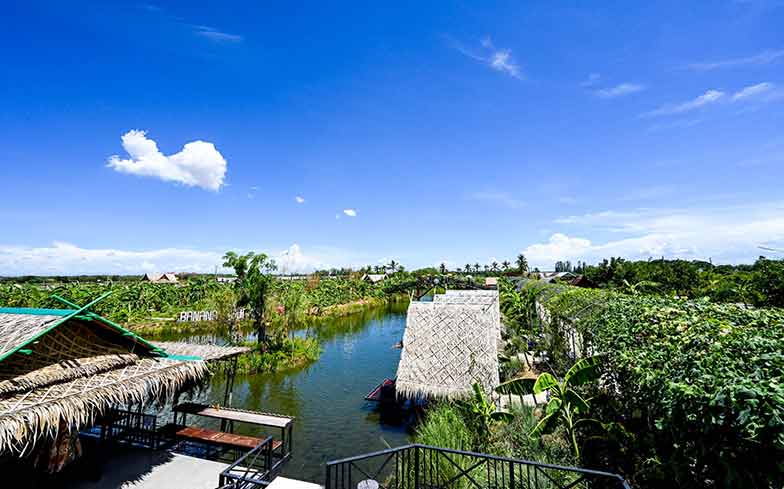
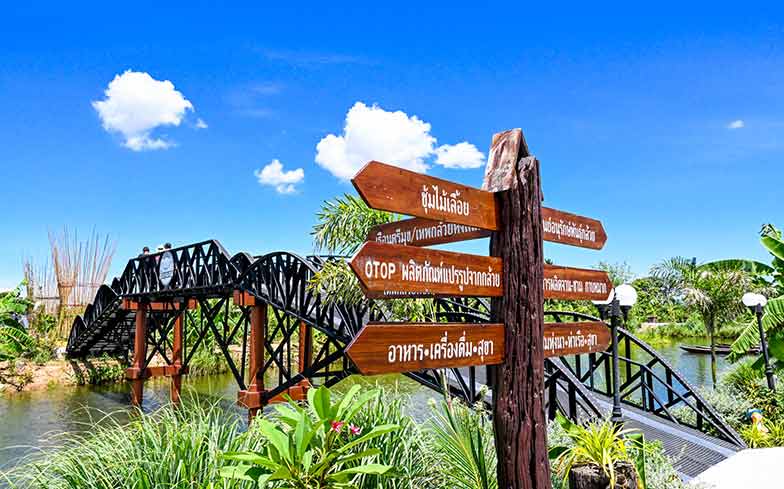
Suphanburi Banana Conservation Center: It is a sufficiency agricultural community enterprise, responsible for the conservation of rare banana species in Thailand; and it has collected up to 108 banana species, especially the species of Suphan Buri itself.
Source
Thailand Tourism Directory
Recommended
Entrance fees
• Entrance fees: Non-fee
• Remark : -
Review (0)
0
จาก 5.0
Availability
Value
Service
Relate Agritourism
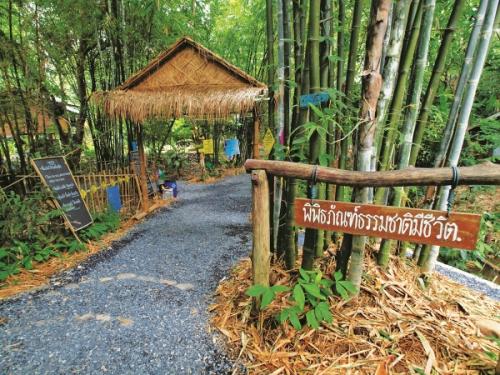
There are no charges for visiting Bhumirak Dhamachart Centerm except if you come in groups and need to participate in the activities that the Center has arranged. Here is an excellent learning source, which provides you understanding of the meaning of the word “sufficient” and how to use resources to gain the most benefits and appreciate its value. The walk around this place is in a circle, starting from the Northern Zone to be excited with the planting of various types of bamboo in both ways as well as the prettiness of the bamboo bridge, the bamboo house near the lotus pond, and the bamboo toys. It is exhibited in this way so that we will know about the many benefits of bamboo, including the making of the water dripping trough for watering the trees and soil to replace people; walking up the small mountains to learn about the wild mountain; hydraulic ram pump is to use water to compress the water to the highland instead of using the water pump, wet fire break system, benefits of vetiver grass, and how to build the check dam. Then, walking though the Central Zone to learn about New Theory Agriculture for the farmers to gain benefits from their own land to its value; learning how to build the soiled house and many types of herbs. After that, walking though the Northeastern Zone to visit the rice bank; learning about the rice milling and how to raise the livestock, in which huge cows can be seen in the stalls; how to make compost for own use so that there is no need to buy chemical fertilizer, and learn about Hom Din, which is how to bring back to good soil for farming by covering the land. But how to do that? It is better to learning by yourself. Lastly, going into the Southern Zone to look at how to burn charcoal from bamboo; how to make Biodiesel, and learn about Kaem Ling Project. Moreover, throughout the Center, I have seen many big and small watercourses along the way. There are pools, agricultural beds to grow crops, Chai Phatthana Hydraulic Turbine, the growing of vetiver in water, and many other things. This is the end of the walk where we have received knowledge and enjoy an untiring walk. Walking around, looking, listening, and asking the officer relentlessly just because things that we think ‘we know’ become things we never knew before. This is because we are used to all these projects or theories but we have never practiced or actually touched. How to travel: From Rangsit intersection, take the direction of Ong Kharak District. Head to use the route of Nakhon Nayok-Nang Rong Waterfall. Pass through Wang Takrai. Before reaching Nang Rong Waterfall for about 2 kilometers, turn right into Khun Dan Prakan Chon Dam Project. Go straight for about 3 kilometers until reaching the traffic circle (with the elephant statues). Go to the right to cross the bridge. When reaching the four-way intersection, turn right and go straight for 200 meters. The Center is on the left-hand side.
Nakhon Nayok
It is an agritourism attraction that is still natural and pure. It is also warm with the beautiful way of life of the hill tribes. During September to October is the rice farming season which is suitable period to visit.
Mae Hong Son
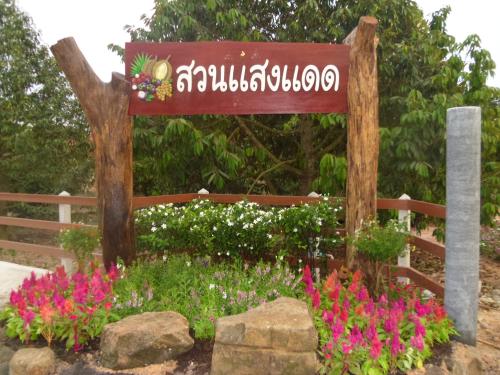
The ancient 200-year-old garden utilizes the resources for the long-term highest benefits. It is located at No. 5 Moo 11, Laem Sai Sub-district, Lang Suan District, Chumphon Province, about 2 kilometers from Lung Suan Market. Samroeng Rajavate, the fourth generation of the family, is a current caretaker. This is the mixed garden, where various fruits are grown in the same area. Whether Local Durian, Mangosteen, Local Rambutan, Langsat, Betel Nut, Coconut, Nutmeg, Sato, Lukniang, Sapodilla, Champa, Jackfruit, Mafai, Banana, Homegrown Vegetables, and Herbs. Without the use of chemical fertilizers to accelerate growth. The soil is treated by growing the grass to nourish the soil moisture throughout the year. Natural fertilizer is used, such as dead leaves and annual crop residues. For pest control, birds, squirrels, and tree shrews are eating worms and insects as food. The cost includes the labor cost during harvesting season to cut grass to facilitate the harvest and at the area to plant the trees that will be repaired.
Chumphon
"Suan Lamai" is a large orchard on an area of ​​over 800,000 square meters with a tram service for tourists to explore the orchard and enjoy various kinds of fruit in a buffet such as a Rambutan, Mangosteen, Longan, Grapefruit during fruit season. During the Winter, "Suan Lamai" will opens for visitors to visit a Strawberry farm and colorful Cosmos flowers garden. There's also a sheep farm for animals lover who wants to feed a sheep and take photos with those sheep.
Rayong
Learning center for organic farming Conservation of Thai horses, hippo therapy (for autistic children), visit the garden, eat fresh fruit from the organic farming orchards
Chanthaburi
Seasonal fruit garden with fragrant durian, sweet rambutan and delicious mangosteen; affordable price, pay attention to every plant delivered directly to the customer
Saraburi
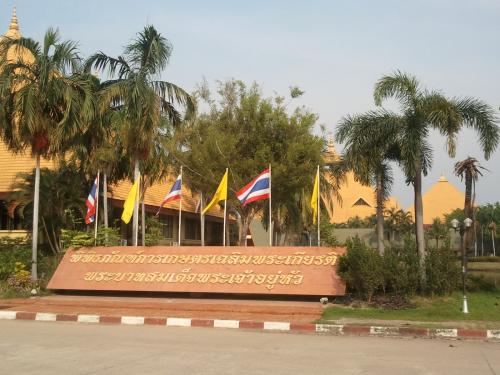
1. Methods of organizing activities - Guided tours, cooking and eating Vietnamese food, Wearing Ao Yai (Vietnamese costume), and homestay 2. Community’s way of life - safe vegetable growing local cooking sip local tea 3. Tourist participation – visit vegetable plots Vietnamese food, cycling Tour Program Taste local tea, collect vegetables, Vietnamese cooking, Wearing Ao Yai, cycling to see the cultural lifestyle of Thai people of Vietnamese descent, and stay in a homestay Route links to other attractions (with distance/km) - Freshwater Fish Museum, a distance of 2 km. - Chaloem Phrakiat Chakri Dynasty Hall, a distance of 2.5 km. - Landmark, Phaya Si Sattanakharat, a distance of 5 km. - The 3rd Thai-Lao Friendship Bridge, a distance of 15 km. Community enterprise products in the community Vegetables are safe from toxins, fruit, dried/fresh tea leaves, hammocks, hemp leaf snacks.
Nakhon Phanom
Phu Tham Phra is a large cave, about 3 wa wide, about 8 wa long, located on the southern slope of the mountain. There is an entrance along the rock niche which is majestically located around a tunnel; from the mouth of the cave to the north can walk comfortably. Tham Phra Buddha Cave has 2 levels of nature as a place to be enshrined of Buddha statues, which are lined up in rows and there are 2 reclining Buddha images, Phra Kajjana Buddha images, built during the reign of Ajarn Dee Chano in this beautiful cave Phu Tham Phra is a small mountainous area. The area is about 200 rai, with mixed deciduous forests that are generally quite complete, providing shady, cool weather. It is the watershed source of many creeks. The stone pillar looks like a tourist attraction of Phu Pha Thoep. And there is a viewpoint as a beautiful natural source near the ascent, there will be a brick arch to be "Phu Ngo", the locals call Khong Gate which is located in the north of Phu Tham Phra, about 1 kilometer away. Currently, only ruins remain. The sanctity of Phu Tham Phra that has been passed down from generation to generation is that if villagers in that area go out to find forest products; they must come to this cave to worship. Then there will be luck in making a living and escape from all dangers.
Yasothon
Kho Khun Nong Haen Group is a new agricultural attraction for livestock in Yasothon province; by opening a farm to welcome tourists to experience the lifestyle of a community of successful fattening cattle herders at the national level. Show the knowledge of cattle that are raised like a beloved pet as well as providing knowledge on the integration of groups and raising fattening cattle to generate income. Tourists can go for a day trip or stay overnight in the form of a homestay. In addition, there are beef cattle for sale to tourists who are interested in cooking at home at an affordable price.
Yasothon
Phra That Kuchan Located within the Ban Ku Chan Temple is an important sanctuary. People of Yasothon and nearby provinces pay their respects. The appearance is a square lotus-shaped chedi, shaped like Phra That Phanom, but smaller. The part of the lower base in the shape of an inverted lotus is a low facing lotus. Supporting a flat rectangular high base connected with a square lotus shape decorated with exquisite and beautiful patterns in ancient times. and the top of the relic in a square shape, which supports the tiered top From the evidence, it should be built according to the general motto of building relics, namely, to contain the Buddha's relics. Each year, a water bathing ceremony is held to preserve the good traditions. Architectural features: Phra That Ku Chan, width 5.10 meters, height 15 meters. Location is located at Ban Ngew. In the middle of the courtyard of Wat Ku Chan, Ku Chan Subdistrict, Kham Khuean Kaeo District, Yasothon Province which looks similar to Phra That Phanom. The only difference is the size that Phra That Ku Jan is smaller. Significance to the community: It is a place of worship for the people of Yasothon and nearby provinces. Every year, the people of Ku Chan sub-district will bring water, perfumes to bathe the relics in the morning of the full moon of the 6th month. In the afternoon, they go to bathe the water ceremony. Ku" after that, they will take them to Nong Sa Phang to bring water from Nong Sa Phang to perform the ceremony Pouring water on relics and bai sema which this ritual must be done annually There is a belief that if the ceremony is not performed, it will cause rain out of season; the villagers of Gu Zhan therefore practice this ritual regularly.
Yasothon
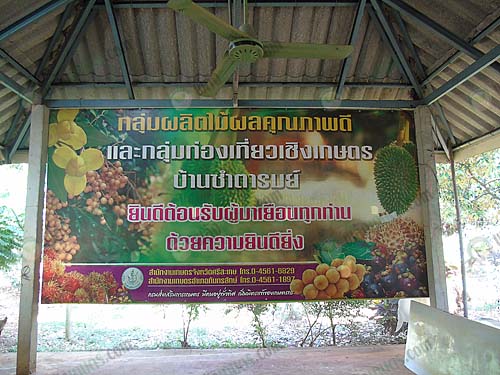
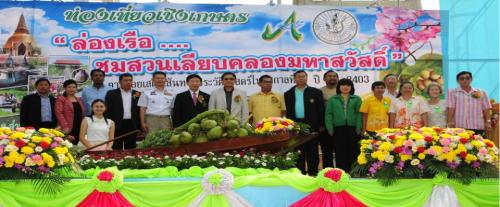
Community Enterprise, Fruits Quality Promotion Group Phato Sub-district, Phato District, Chumporn Province operates agrotourism by networking with the tourism groups in Phato District. Activities available here are rafting, garden touring, fruit tasting, trekking, and visiting a waterfall. Besides, traditional food tasting, such as orange curry with banana stalk and pork belly, stir-fried Liang leaves with egg, rice in bamboo, and traditional coffee tasting.
Chumphon
Khung Bang Kachao is a part of the curved area of Chao Phraya River. Its shape is like a pig's stomach, covering wide areas of ​​6 sub-districts of Phra Pradaeng District, Samut Prakan Province. Including Bang Ka Chao, Bang Nam Phueng, Bang Ko Bua, Bang Krasao, Bang Yo, and Song Khanong, in which the area ​​approximately is 19,200,000 square meters. On September 14th, 1977, a cabinet resolution was made to designate ""Khung Bang Ka Chao"" as the green area being suitable for cultivation without permission to construct buildings more than the regulative height. In 2006, Time magazine praised Bang Krachao as The best Urban Oasis of Asia, also known as the best lung among the urban in Asia. Even though many decades go by, this place is still considered as the ""lung"" to efficiently purify the air in Bangkok and Samut Prakan. Agricultural activities in Khung Bang Kachao area will be a bike ride through the green space that is becoming a popular activity Because it is like an oasis that gives an oxygen for the city with the garden area around 320,000 square meters. There are many types of large trees and banyan roots covering with spectacular tree tunnels that make there shady and relaxing. There is also an interesting agricultural lifestyle and local wisdom, and stopover spaces to do the activity with farmers and community enterprise groups Program tour 1. Visit the golden mango orchard (Nam Dok Mai Khung Bang Kachao, the latest Thai GI mango) by Lt. Col. Chamnan Onyam, the President of Golden Mango Producer Club in Samut Prakan, the President of Community Enterprise, Colonel Agriculture and the owner of the golden mango orchard in Khung Bang Kachao area. He becomes the expert to give an information and sell the product and scion. 2. Visit an ornamental plantation (Golden croton, Sealing-wax palm, and Cordyline) leading by Ajarn Narong Samleerat, the chairman of Learning Center for Enhancement of Agricultural Production, Phra Pradaeng District and Ajarn Somsak Samleerat, the agricultural philosopher. They become speakes to give an information and sell the trees. 3. Visit the integrated agricultural garden, Smart Farmer in Bang Kachao Subdistrict 4. Community enterprise for Health Sciences Activities, including massage with herbal compress, showing how to make herbal compress balls, and selling neck pillows, cereal belts, compresses, shoulder pillows and acupressure pillows. 5. Herbal Fragrant Incense House Community Enterprise with herbal incense making, tie-dye fabric making, and homestay service Linked routes with other tourist attractions (Every place is within Kung Bang Kachao. Phra Pradaeng District Samut Prakan Province) - Bang Nam Phueng Floating Market, Bang Nam Phueng Subdistrict - Sri Nakhon Khuean Khan Park and Botanical, Bang Kachao Subdistrict - Siamese Fighthing Fish Gallery, Bang Kachao Subdistrict - Bird Watching Tower, Bang Kachao Subdistrict - Boat Museum, Bang Ko Bua Subdistrict - Bangkachao vegetable warehouse Community enterprise products - Health Craft Community Enterprise, such as, neck pillows, cereal belts, compresses, shoulder pillows, and acupressure pillows - Herbal Incense House Community Enterprise, such as, fragrant incense, and tie dye crafts (bags, clothes, and scarves) - Coconut sugar - Ornamental plants, such as Golden croton, Sealing-wax palm Cordyline, limes' scions, etc. - Fruit trees, such as mangos, mangos' scions, limes, limes' scions, etc. - Arts and crafts from community enterprises, such as auspicious wood from lucky stones, flowers from fish scales, and flowers from gossamer fabrics.
Samut Prakarn