คำค้นยอดฮิต: ข้าวเหนียวมะม่วง ของขวัญออแกนิค ผลไม้สด
TH | EN
฿ 0.00
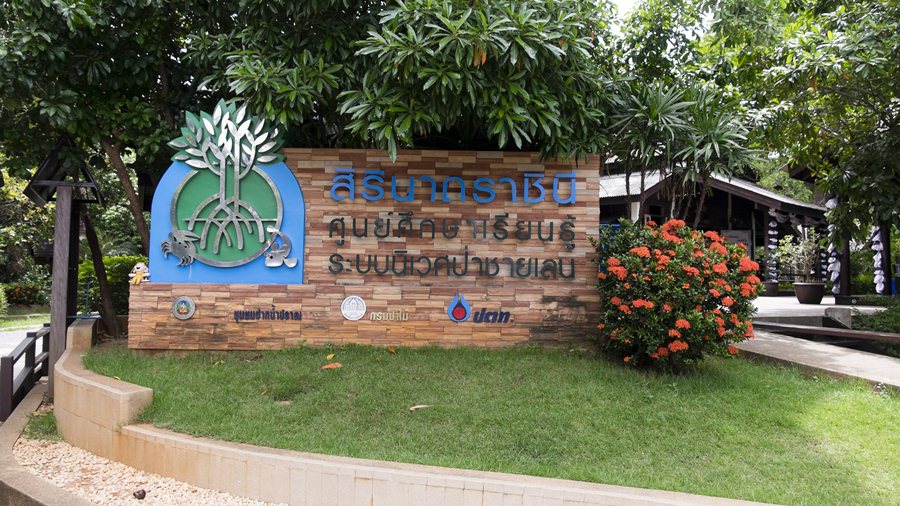
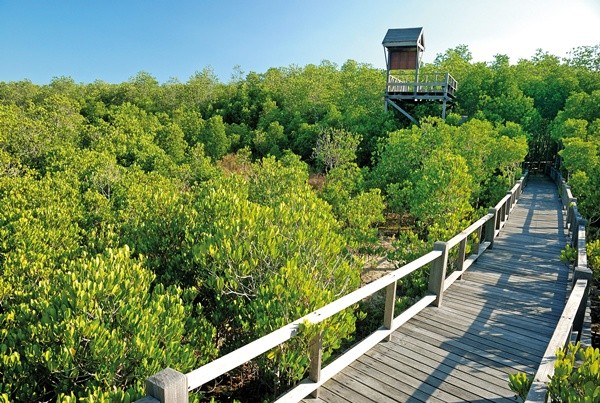
Sirinat Rajini Mangrove Ecosystem Study Center
Sub district Pak Nam Pran District Pran Buri Province Prachuap Khiri Khan
Image
Image
Image
Image
Weather
Open
Business hours
• Sunday
: 09:00 - 16:00
• Monday
: 09:00 - 16:00
• Tuesday
: 09:00 - 16:00
• Wednesday
: 09:00 - 16:00
• Thursday
: 09:00 - 16:00
• Friday
: 09:00 - 16:00
• Saturday
: 09:00 - 16:00
Note
: -
Review Score
0
Availability
0
Value
0
Service
0
Read more >
Information
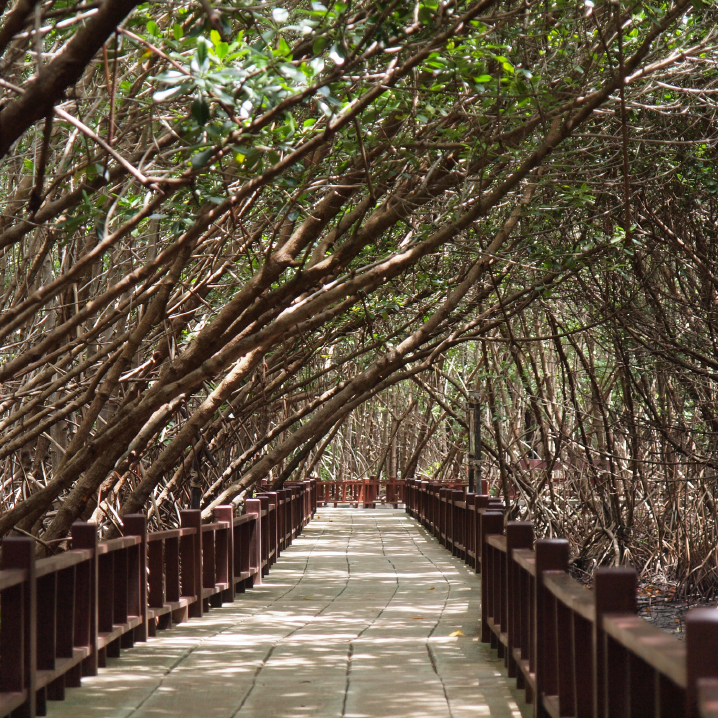
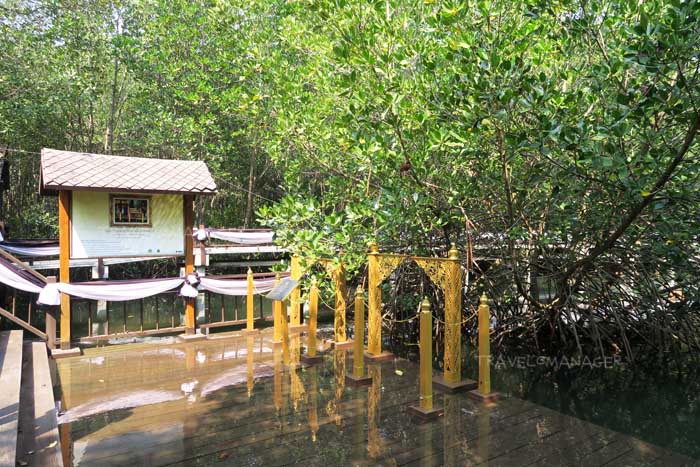
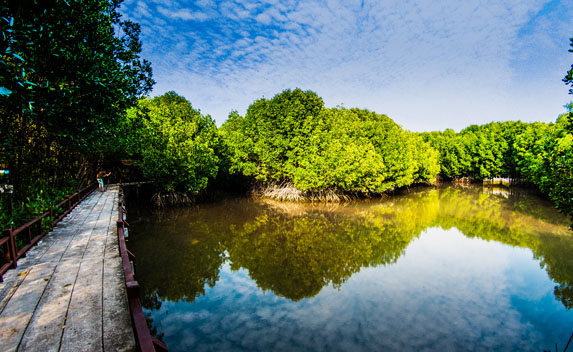
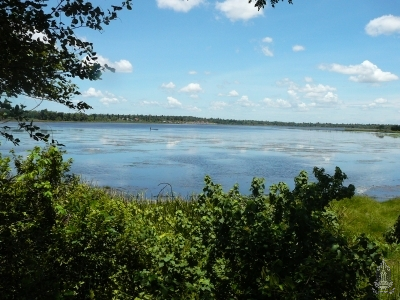
Sirinat Rachinee Mangrove Ecosystem Learning Center is the first mangrove rehabilitation center from abandoned shrimp farms in Thailand. Originally, it was a shrimp farm located in the Pa Khlong Kao National Forest Reserve - Khlong Khoi, Pak Nam Pran Sub-district. Pranburi District Prachuap Khiri Khan. When the King Rama 9 and the Queen came to Pranburi, The Royal Forest Department responded by canceling the shrimp farming concession and then included as part of the Pak Nam Pranburi Forest Development Project. They accelerated the restoration of mangrove forests and designate them as target areas for reforestation and later develop into a mangrove ecosystem learning center.
Source
Thailand Tourism Directory
Recommended
Entrance fees
• Entrance fees: Non-fee
• Remark : -
Review (0)
0
จาก 5.0
Availability
Value
Service
Relate Agritourism
A village that grow organic vegetables. Visitors can come and learn how to compost from garbage, making compost from oyster snails, and cultivation of organic vegetables from the royal family of Chakphan Pensiri. Able to visit every day. Tel 08199896279
Phayao
King Bhumibol Adulyadej (King Rama IX) foresaw the significance of plant genetic conservation prior to a recognition of the terms “Biological Diversity” and “Conservation” in Thailand. During the trip to Klai Kang Won Palace, A. Hua Hin, Prachuap Khiri Khan Province in 1960, he passed through A. Tha Yang, Phetchaburi Province and noticed many Yang Na trees (Dipterocarpus alatus). Therefore, he had royal words to collect the seeds to plant at Phra Tamnak Piam Suk, Klai Kang Won Palace, and grow the seedlings at Royal Chitralada Projects to study. In 1985, King Rama IX gave a royal word to conserve jackfruit tress around the Grand Palace and initiated the plant conservation project in the palaces by tissue culture. Later in 1986, he had the royal idea to conserve and breed rattan palms and arrange the herbal garden in Royal Chitralada Projects area. Her Royal Highness Princess Maha Chari Sirindhorn carried on the plant conservation project by having the royal idea and asked Lord Chamberlain to carry out plant conservation project in June 1992, when the seed gene bank was formed, and study the preservation of non-industrial crops under the royal thought framework. In 1993, Mr. Sujin Phunikom, the Assistant Subdistrict Headman of Salui and Tha Sae District, Chumporn Province, and his group, cooperated with the Director of Ultra Products Co., Ltd. and the agriculturists in Chumporn Province to establish plant conservation project at the public area located at Moo.6, Salui District (presently Moo. 5 and 6, Salui District, and Moo.4 and 7, Song Phi Nong District). At the same time, the Royal Chitralada Projects was looking for the area to set up the Plant Genetic Conservation Project Under The Royal Initiative of Her Royal Highness Princess Maha Chari Sirindhorn. Subsequently, Royal Chitralada Projects represented by Professor Prachid Wamanont (the Consultant) and the team met with Chumporn Governor (Mr. Prayoon Promphan) to discuss about the project. The first five years, the project was named “Plant Conservation and Development Project Under The Royal Initiative of Her Royal Highness Princess Maha Chari Sirindhorn, Chumporn Province”. Chumporn Provincial Agricultural Extension proposed the project for the approval from Chumporn Governor and submit the project documents to the Director of Royal Chitralada Projects to respectfully inform to Her Royal Highness Princess Maha Chari Sirindhorn on 26 April 1993. Moreover, Plant Conservation and Development Project was integrated with the royal plant genetic conservation project, which Dr. Pisit Wora-urai was a Chairman. The executives meeting on 9 July 1997 had the resolution to change the project’s name from “Plant Conservation and Development Project Under The Royal Initiative of Her Royal Highness Princess Maha Chari Sirindhorn, Chumporn Province” to “Plant Genetic Conservation Project Under The Royal Initiative of Her Royal Highness Princess Maha Chari Sirindhorn”
Chumphon
90 Market is the flea market selling varieties of agricultural products, which are surplus and processed for sale. The market receives the budget from 9101 Follow the King’s Lead Project for Sustainable Agriculture Development. The market opens every day, only the front zone that opens on Sunday only. Apart from agricultural products, events are organizing, and the government and the private sector also participated during the festival season. 90 Market won the1st Award at the district level in 9101 Follow the King’s Lead Project for Sustainable Agriculture Development.
Chumphon
Winter Flowers Learning Plot - Cymbidium orchid cut flowers - convert tulips Myrrh Learning Plot - Rosemary - Geranium How to grow crops in conservation on the highlands learning plot - Avocado - Arabica coffee - Macadamia Methods for organizing activities - There is a photo spot, parking lot, restroom available. - Take a walk around the learning plots (flower plants, fragrant plants, conservation plants) and learn about propagation and planting/care - There is a point for selling community products, products, vegetables, fruit trees, field crops. - Drinks, coffee, tea, Jiaogulan are available. - There is a house / tent camping service. Participation of tourists - See, taste, shop, community products, bag products, souvenirs, agricultural products, winter fruit trees, field crops, seasonal vegetables - Take a photo, check-in, flower/tulip plots - Take a walk around the learning plot inside the center - Indulge in the atmosphere of the sea of mist in the winter of Chiang Rai. Tour program: 2 days 1 night program Day One 09.30 Depart from Mae Fah Luang International Airport, Chiang Rai, travel to Cherntawan Farm. 10.00 Stop for breakfast at “Phu Thian Resort” / “Jui Kung Pao” 11.00 Cherntawan Rai, study Dharma and the concept of the University of Buddhist Economics (Alternative educational institutions for development according to Buddhist economic philosophy) integrated natural agriculture 12.00 Depart from Cherntawan Farm Stop for a meal at "Lanna Tawanwa" restaurant. 13.00 Watch a demonstration of roasting Assam tea and making Miang, the original model by the farmer community, Mae Loi tea production community. 14.00 Depart from Mae Loi Tea Production Community Enterprise Group To Rai Ruen Ruen, Ngew Subdistrict, Thoeng District 14.30 See the beauty of the organic farm by the new generation, Snack from organic farming plots directly for health, learning and new experiences both principles and actions 15.00 Depart from Rai Ruen Ruen to Doi Pha Mon Center 17.00 Tribal dinner, grilling, activities around the bonfire. along with watching performances from ethnic youth farmers Tribal arts and culture from the community amidst nature and sunset Day Two 04.30 Wake up, do personal tasks 05.00 Travel to the top of Phu Chi Fa Admire the beautiful natural scenery mountains and sea of clouds 06.00 Return to Doi Pha Mon Center 07.00 Have breakfast 08.00 Enjoy the agricultural activities of the center, Doi Pha Mon, see the fragrant plants, tulips, see the beauty of the Cymbidium plots and learn how to grow coffee, avocado and macadamias, taste fresh coffee. High quality from farmers 12.00 Take a break for lunch 13.00 Travel to Ban Phithak Thai Organic Coffee Producers Group. 13.30 Take a walk around the organic coffee plot by the farmers group of Ban Phithak Thai organic coffee producers. Join to study the process of growing good quality organic coffee. Buy souvenirs from ethnic communities 14.30 Travel to Chiang Rai Clock Tower Important landmarks of Chiang Rai 16.00 Buy community products Local food, souvenirs, souvenirs Route links to other attractions: 1) Phu Chi Fa, Tub Tao Subdistrict, Thoeng District, 11 km distance 2) Pha Tang, Po Subdistrict, Wiang Kaen District, a distance of 36 km. 3) Doi Chom Dao, Tub Tao Subdistrict, Thoeng District, distance 6 km.
Chiang Rai
Ban Song Yae Christian Church is located in Thai Charoen district, Yasothon. There is a history in 1908 that there were 5 families who fled from different places to live in this area, they fled for the same reason, which was accused being ghouls and they were therefore attacked and drove away. It is the 4th church, planned for construction in 1936. Villagers gathered wood and built it in 1947. The shape of the church was built in Thai art style, width 16 meters, length 57 meters. It is the largest in Thailand, using 80,000 wooden planks as roofing boards, using 360 columns of different sizes, mostly wooden poles. The pillars in the middle row are the largest and longest with 260 trees, more than 10 meters high from the ground. The floor planks are of red wood and large Takhian wood. The wooden bench can hold over a thousand people. The church bell has a diameter of almost 2 feet in a tall bell tower built in the style of a bell tower in typical Thai temples. But strange that it is separate from the church and because the wood that has been gathered is a lot Therefore, the remaining wood was used to build Ban Song Yae Pittaya School.
Yasothon
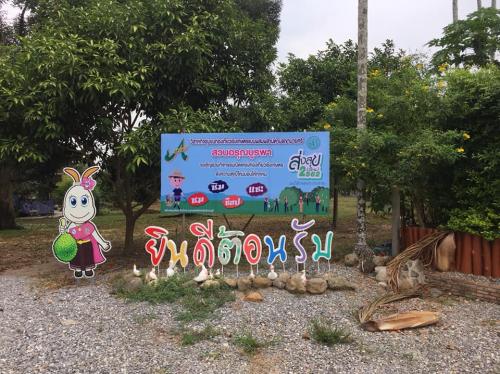
It is an eco-tourism attraction with non-toxic vegetables, flowering plants
Chiang Rai
- Watch the fish and mussels raising in cages, - Cultivation of seagrass - Study mangrove ecosystem - Processing of salted fish with nets/sea food - Toei Panan Weaving tourism program - Arrive at the group office. Listen to a briefing on the history of Ban Pru Jude Cage Fish Farming Community Enterprise - Learn how to raise aquatic animals in cages - Take a boat trip to see the mangrove ecosystem. Study mangrove forests, hot springs, visit Boonkong Bay, plant seagrass to conserve food for dugongs in the Trang sea, visit various islands, beaches, return to the accommodation, have dinner, see the community's way of life in the morning. Seafood Processing Group, Kang Mung Salted Fish, Toei Panan Basketry Group, buy souvenirs, Travelling back Route links with other attractions (with distance/km) - Pak Meng Beach 8 km. - Hua Hin Beach 3 km. - Rajamangala Beach 6 km. Note: The distance measurement is taken from the point of the group office as a starting point Community enterprise products in the community Agricultural products, seafood, salted fish with nets Toei Panan wicker products
Trang
Baan Suan Akira was established as a learning center. This project is due to the royal Initiative of His Majesty King Bhumibol Adulyadej Maha Bhumibol Adulyadej the Great with the philosophy of sufficiency economy. Local people can apply the concepts and practices in their living. The learning resources are as follows; 1. Learning Center due to the royal Initiative project, Pai District, Mae Hong Son 2. New Theory Agriculture Learning Center, Pai District, Mae Hong Son 3. Sufficiency Economy Learning Center, Pai District, Mae Hong Son 4. Learning Center for Enhancement of Agricultural Product Production in farming, mixed farming, livestock, and fishery 5. Prototype plot for organic plant production of Mae Hong Son 6. Agro-tourism according to The OTOP Nawat Withi Tourism Community Project 7. Land Development Technology Transfer Center of Mae Hi Sub-district 8. Khok Nong Na Learning Center Model, Baan Suan Akira
Mae Hong Son
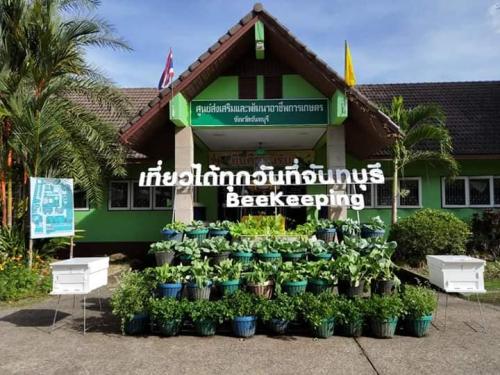
Agricultural Technology Promotion Center for Economic Insects Chiang Mai Province Established in 1980 It is an agency under the Department of Agricultural Extension. Ministry of Agriculture and Cooperatives It plays a major role in research studies. Test and apply economic insect farming technology Promote and transfer economic insect culture technology as a center for development, production, expansion and distribution of economic insect species, as well as providing basic product quality inspection services and diagnosis of diseases and pests of economic insects to farmers and interested parties. It is also a tourist attraction. Agribusiness that is open to both Thai and foreign tourists to get to know and learn about the life of bees and important economic insects of Thailand. Each year, both Thai and foreign tourists visit to study work and travel to the learning points that the center has exhibited, such as learning points on beekeeping, bee breeding, burrow bee, cricket, lac, queen bee, and product processing. and also provide “Honey Shop” product display and distribution point where tourists can watch, taste and buy real, good quality honey and other processed products. of community enterprises and entrepreneurs Tourism program : Learning point/base interesting activities 1. Breeding bees. Open house for breeding bees. (Acquaintance with bees, life cycle and well-being of bees in the hive) Keeping and maintaining bee health checks collecting nectar from flowers and sap. Preliminary analysis of honey quality. 2.Honey bees Wild bees make money. (Get to know the burrowing bees and natural nest building. Traditional poaching beekeeping techniques Modern honey beekeeping Protecting against the pests of honey bees Techniques for collecting good quality honey 3. Chan Rong Open House Chan Rong (Get to know the amazing mini bee, the best pollinator). propagation Nectar, pollen and resin collection behavior of saplings Making resin extracts and their uses 4. Crickets Crickets are the world's reserve protein food source. Commercial cricket species Standard farming techniques and management Processing crickets as food Learning point/base interesting activities 5. Shellac: Get to know lac insects/life cycle and benefits. Transplanting plants for lac culture farming techniques Care and harvest Technology for protection and nursery of lac species during the dry season 6. The queen bee opens the experience of finding the queen bee queen in the hive. birth of queen bee The Great Duties of the Queen Bee Techniques for cultivating queen bees 7. Processed products Watch/Taste/Touch A variety of bee products, natural gifts. The benefits of bee products Tips for buying honey Processing bee products into products for daily use Route links with other attractions: - Chiang Mai Night Safari Night Zoo, distance 750 m. - Royal Park Ratchaphruek, a distance of 1 km. - Wat Inthrawat (Wat Ton Kwen), a distance of 2.5 km. - Wat Phra That Doi Kham, a distance of 4.4 km. - Baan Tawai Handicraft Center, a distance of 10 km. - Wiang Kum Kam, a distance of 11 km.
Chiang Mai
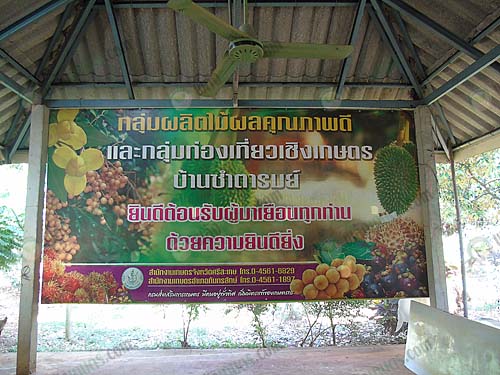
Indulge with a seasonal fruits buffet such as durian, rambutan, mangosteen, along with local food services.
Rayong
Phra That Kuchan Located within the Ban Ku Chan Temple is an important sanctuary. People of Yasothon and nearby provinces pay their respects. The appearance is a square lotus-shaped chedi, shaped like Phra That Phanom, but smaller. The part of the lower base in the shape of an inverted lotus is a low facing lotus. Supporting a flat rectangular high base connected with a square lotus shape decorated with exquisite and beautiful patterns in ancient times. and the top of the relic in a square shape, which supports the tiered top From the evidence, it should be built according to the general motto of building relics, namely, to contain the Buddha's relics. Each year, a water bathing ceremony is held to preserve the good traditions. Architectural features: Phra That Ku Chan, width 5.10 meters, height 15 meters. Location is located at Ban Ngew. In the middle of the courtyard of Wat Ku Chan, Ku Chan Subdistrict, Kham Khuean Kaeo District, Yasothon Province which looks similar to Phra That Phanom. The only difference is the size that Phra That Ku Jan is smaller. Significance to the community: It is a place of worship for the people of Yasothon and nearby provinces. Every year, the people of Ku Chan sub-district will bring water, perfumes to bathe the relics in the morning of the full moon of the 6th month. In the afternoon, they go to bathe the water ceremony. Ku" after that, they will take them to Nong Sa Phang to bring water from Nong Sa Phang to perform the ceremony Pouring water on relics and bai sema which this ritual must be done annually There is a belief that if the ceremony is not performed, it will cause rain out of season; the villagers of Gu Zhan therefore practice this ritual regularly.
Yasothon
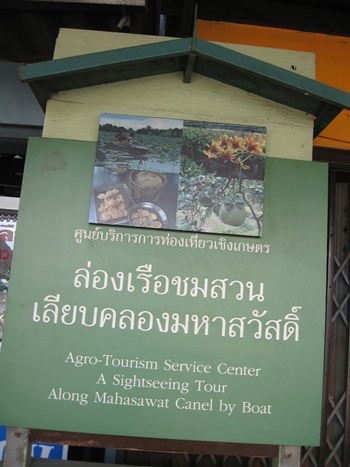
The perfect combination between a Historic River and Agro-Tourism, ""Cruising along the Maha Sawat canal and the beautiful orchard sceneries."" Changing the natural capital to be a perfect agricultural tourism. The agro tourism ""Cruising along the Maha Sawat canal and the beautiful sceneries"" was initiated from the concept of bringing the way of life of farmers who are doing routine of working together with the existing ""natural capital"", the resources of agriculture, gardening, farming, plowing, which parents, grandparents, and grandparents carry on until this generation. To adapt with what is available in the area, Khlong Khut Maha Sawat, historic canal that King Mongkut (Rama IV) graciously digs for a route for His Majesty to worship Phra Pathom Chedi. It took 5 years to complete the excavation, from 1855 to 1860. Khlong Khut Maha Sawat is 27 kilometers long from Bangkok to Tha Chin River and has many stories about the canal, such as the King's request to build 7 pavilions along the canal, for example the City Hall (Sala Klang Subdistrict Nonthaburi Province), Sala Thammasop (Taweewattana District, Bangkok), Salaya and Sala Din, which are in Phutthamonthon District. In addition, there are people using the last name beginning and ending with the word ""Sawat"" about 68 surnames such as Sawat Daeng, Sawatjun, Sawatsoradet, Sawatnam, Sawatdee Me, Desawad, etc. tourism program One Day Trip Point 1 going to the pier at Suwannaram Temple with welcome farmers to lead tourists to various spots Point 2 Watching the Gac Processing and the story before it came to be Yentafo Fak Rice and healthy gac juice Point 3 Visiting Na Bua Luang Cut Dok to learn how to make lotus Rowing a boat to collect lotus in the middle of the swamp Learn to fold lotus petals. Point 4 Visiting the miracle of Thai rice. Point 5 Orchid Garden Visit an orchid garden and cultivate various orchid species. Point 6 Visiting the fruit orchards, mixed farming fields, and tasting seasonal fruits. Taking an E-Tak car ride to see the garden and plots of rice fields Route links with other attractions (with distance/km) Jesada Technik Museum Nakhon Chai Si District, 21 kilometers distance - Thana Market, Nakhon Chai Si District, 25 kilometers distance - Don Wai Floating Market, Sampran District, 10 kilometers distance - Wat Rai Khing, Sampran District, 15 kilometers distance - Lam Phaya Floating Market, Bang Len District, 26 kilometers distance - Phutthamonthon Sathan, Phutthamonthon District, 6 kilometers distance - Phra Pathom Chedi Mueang Nakhon Pathom District, 36 kilometers distance Community enterprise products in the community assorted rice bowls - Crispy Golden Banana - Miang Kham Bua Luang - Seasonal products such as grapefruit, mango, jackfruit, banana - Ornamental plants, lotuses and orchids
Nakhon Pathom