คำค้นยอดฮิต: ข้าวเหนียวมะม่วง ของขวัญออแกนิค ผลไม้สด
TH | EN
฿ 0.00
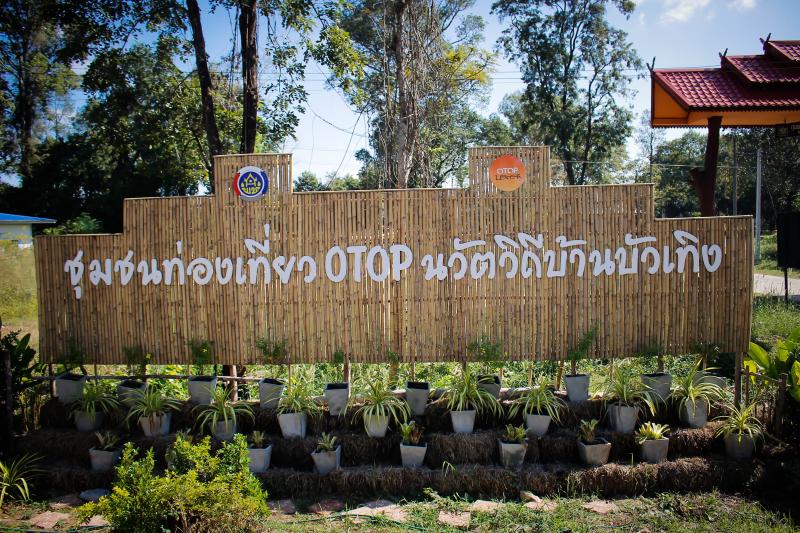
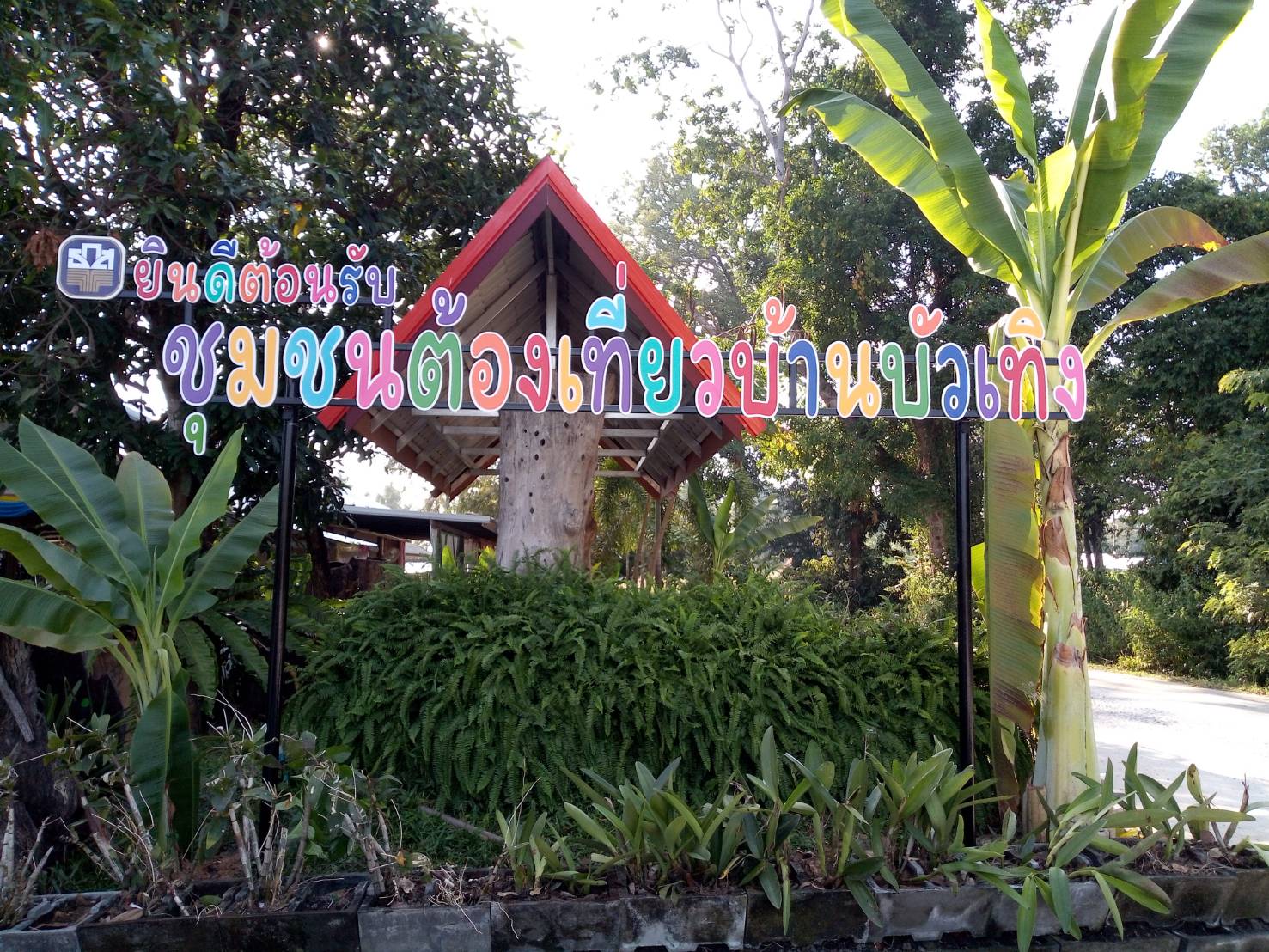
Ban Bua Thoeng Homestay Agricultural Tourism Community
Sub district Tha Chang District Sawang Wirawong Province Ubon Ratchathani
Image
Image
Image
Image
Weather
Closed
Business hours
• Sunday
: 09:00 - 16:00
• Monday
: 09:00 - 16:00
• Tuesday
: 09:00 - 16:00
• Wednesday
: 09:00 - 16:00
• Thursday
: 09:00 - 16:00
• Friday
: 09:00 - 16:00
• Saturday
: 09:00 - 16:00
Note
: -
Review Score
0
Availability
0
Value
0
Service
0
Read more >
Information
Experience the local wisdom of the people in the community, and learn about Sufficiency Economy Philosophy.
Source
Thailand Tourism Directory
Recommended
Entrance fees
• Entrance fees: Non-fee
• Remark : -
Review (0)
0
จาก 5.0
Availability
Value
Service
Relate Agritourism
A village that grow organic vegetables. Visitors can come and learn how to compost from garbage, making compost from oyster snails, and cultivation of organic vegetables from the royal family of Chakphan Pensiri. Able to visit every day. Tel 08199896279
Phayao
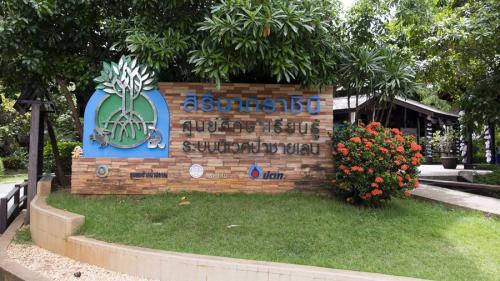
Sirinat Rachinee Mangrove Ecosystem Learning Center is the first mangrove rehabilitation center from abandoned shrimp farms in Thailand. Originally, it was a shrimp farm located in the Pa Khlong Kao National Forest Reserve - Khlong Khoi, Pak Nam Pran Sub-district. Pranburi District Prachuap Khiri Khan. When the King Rama 9 and the Queen came to Pranburi, The Royal Forest Department responded by canceling the shrimp farming concession and then included as part of the Pak Nam Pranburi Forest Development Project. They accelerated the restoration of mangrove forests and designate them as target areas for reforestation and later develop into a mangrove ecosystem learning center.
Prachuap Khiri Khan
Phra That Kuchan Located within the Ban Ku Chan Temple is an important sanctuary. People of Yasothon and nearby provinces pay their respects. The appearance is a square lotus-shaped chedi, shaped like Phra That Phanom, but smaller. The part of the lower base in the shape of an inverted lotus is a low facing lotus. Supporting a flat rectangular high base connected with a square lotus shape decorated with exquisite and beautiful patterns in ancient times. and the top of the relic in a square shape, which supports the tiered top From the evidence, it should be built according to the general motto of building relics, namely, to contain the Buddha's relics. Each year, a water bathing ceremony is held to preserve the good traditions. Architectural features: Phra That Ku Chan, width 5.10 meters, height 15 meters. Location is located at Ban Ngew. In the middle of the courtyard of Wat Ku Chan, Ku Chan Subdistrict, Kham Khuean Kaeo District, Yasothon Province which looks similar to Phra That Phanom. The only difference is the size that Phra That Ku Jan is smaller. Significance to the community: It is a place of worship for the people of Yasothon and nearby provinces. Every year, the people of Ku Chan sub-district will bring water, perfumes to bathe the relics in the morning of the full moon of the 6th month. In the afternoon, they go to bathe the water ceremony. Ku" after that, they will take them to Nong Sa Phang to bring water from Nong Sa Phang to perform the ceremony Pouring water on relics and bai sema which this ritual must be done annually There is a belief that if the ceremony is not performed, it will cause rain out of season; the villagers of Gu Zhan therefore practice this ritual regularly.
Yasothon
Sufficiency Economy Philosophy House is a learning center of the new agriculture theory. Inside the integrated garden, is planting vegetables for household consumption adhering to the sufficiency economy philosophy of King Rama IX. It is also the pilot model of growing rice berry in the 400 plastic tanks that results in the 20 tanks of paddy, which is sufficient for consumption all year round. Later, numbers of villagers and foreigners visit this place. The lecturer is available to provide knowledge about the SEP to the students and interested people.
Chumphon
1. Form of activity: see and study the production process of jasmine rice, volcanic soil, weave mat demonstrate, fabric dyeing from soil at Ba Rai holy well. Sightseeing plant herb production area and herbal processing, buy some souvenir or product and agricultural goods, OTOP center. You can try yummy food in KhanToke style and see Apsara Dance, see view by bicycle, take a rest at homestay, visit rural market in the morning. 2. The way of community: cultivation, southern east livelihood, traces of Khmer civilization. 3. The Participation of tourist: tour, taste, shopping, snap, share, do and learn agricultural station. Tourism Program 2 days 1 night Frst day, Check in at the accommodation, rent some bicycle, see how to produce volcanic jasmine rice station, see how to plant vegetable and herbal processing, having lunch at Baray reservoir. Afterwards, visiting at Mueang Tum Ruin, see around the community by bicycle in the evening then make some traditional dinner at homestay (KhanToke style and see Apsara dance but it is depend on coustomer's demand because it is an extra charge), lie down at homestay. Day 2 Visit morning rural market, give food to the monks, have a meal at homestay, weave mat demonstrate and fabric dyeing from soil at Ba Rai holy well, weave fabric as Paco Fern pattern (Pak Krood) and buy some silk fabric with Pak Krood pattern at The OTOP center, go up the hill to visit Khao Phanom Rung National Park The route that linking with the others tourist attraction 1. Mueang Tum Ruin distance 500 meters. 2. PhanomRung Historical Park distance 5 kilometers. 3. Phu Akkanee Dye Fabric group distance 23 kilometers. 4. Wat Khao Ang-Karn Chaloem Phra Kiat district distance 25 kilometers
Buri Ram
Phra That Kong Khao Noi is located in the rice fields of Tambon Tat Thong; it is an old chedi in the Khmer period, built in the 23rd-25th Buddhist century, corresponding to the late Ayutthaya period. It is located in the area of Wat Phra That Kong Khao Noi which was originally just a rice field in Tambon Tat Thong Phra That Kong Khao Noi is a brick and cement chedi. The shape is strange from the general pagoda is characterized as a rice hull. The Phra That is a rectangular chedi with three wooden indented corners. The square base is 2 meters wide on each side and raised about 1 meter in height. Next to this part is the top of the chedi, which is gradually approaching each other, while the outer peak of Phra That Kong Khao Noi is surrounded by a brick wall measuring 55 meters in size. In addition, behind the relics there is a Buddha image made of bricks. The villagers regarded it as very sacred. And in the fifth month, people come to bathe the Buddha image and cover it with gold. It is believed that if this were not done, the rain would have dried up that year. Also in the area of Ban Tad Thong, the Fine Arts Department has excavated the stories of prehistoric humans by discovering human skeletons in prehistoric times and painted utensils in Ban Chiang style
Yasothon
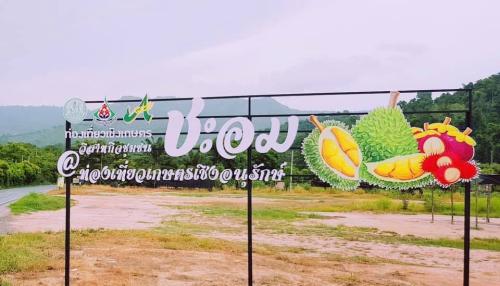
It is an area that connects to Khao Yai National Park; thus, this area has an abundance of nature. And, the villagers here make seasonal orchards, and it is suitable for natural tourism .There is also a tree dug around, selling various seedlings and a camping ground
Saraburi
Suan Hom Meesuk, an agarwood agricultural group community enterprise, is the source of one of the best agarwood species in Thailand
Rayong
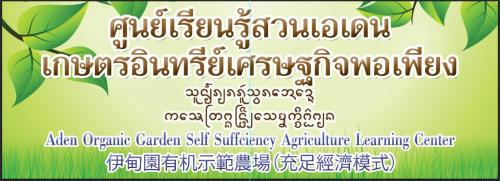
1. It is a learning center for the Garden of Eden, organic agriculture, sufficiency economy. 2. Making biogas for household use 3. Making organic fertilizer and making bio-fermented water 4. Using water buffalo to plow into a traditional way of life 5. Damping and restoring forests for water sources (forest planting) 6. Making pork pits, buffalo pits, chickens, etc. 7. Growing organic vegetables and organic fruits (mixture) 8. Fisheries
Chiang Rai
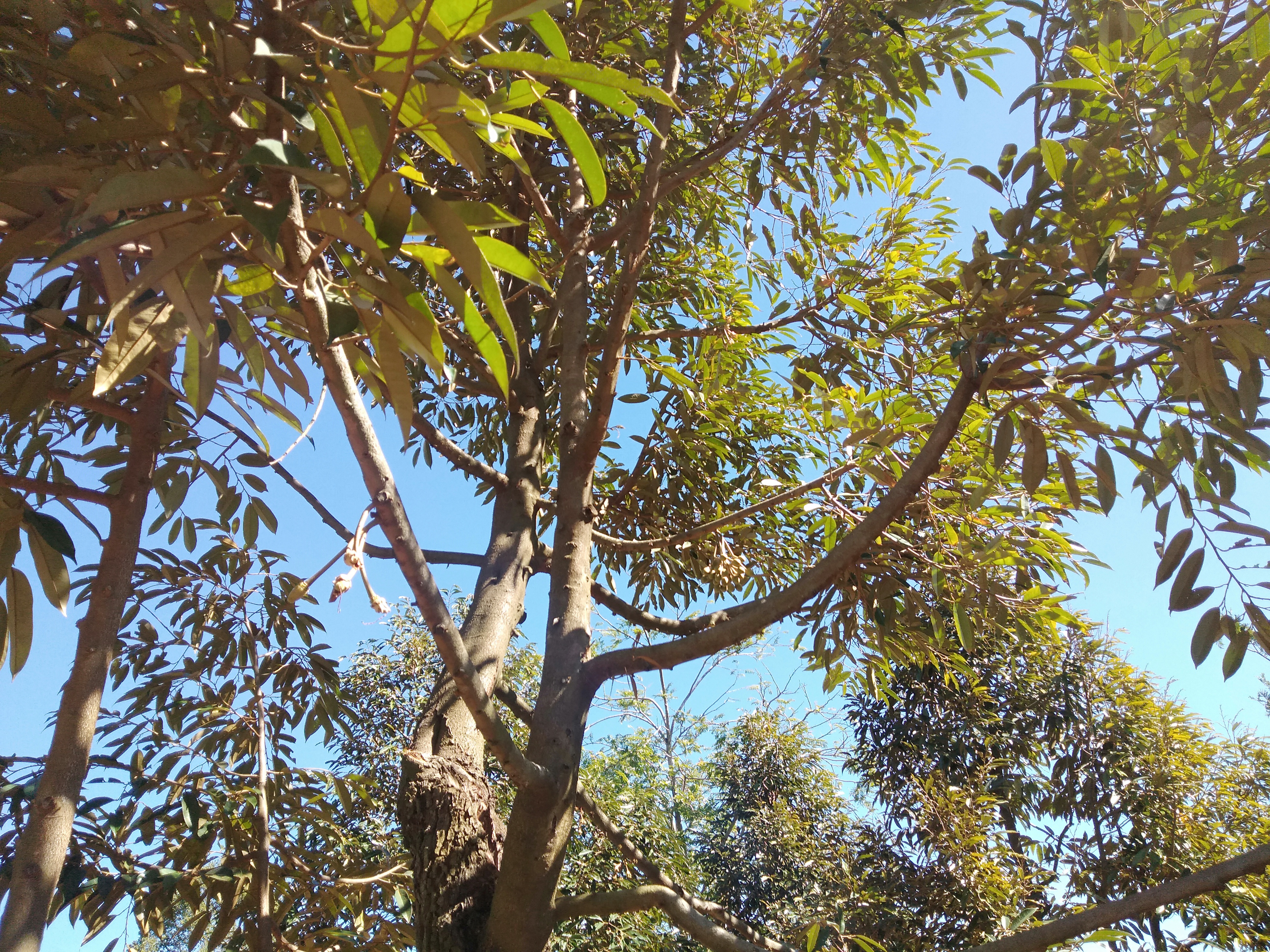
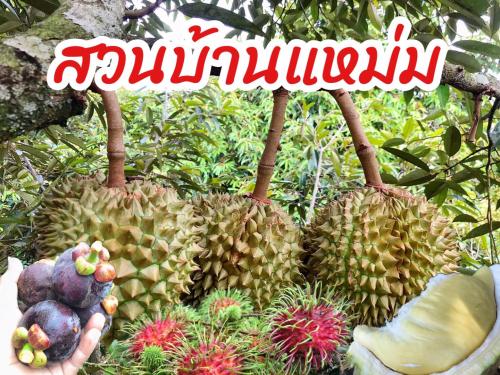
It is shady orchard where tourists will see durian trees, mangosteen trees, etc. that many people have never seen before. There are also fresh fruit from the garden for sale as well. In addition, this garden has green rambutan for sale that everyone said it was delicious.
Saraburi
In the past, the Phu Ruea High Altitude Agricultural Experiment Station was to test the winter fruit varieties for planting in the northeastern highlands, including apple cultivars. and peach varieties for eating fresh In addition, Phu Ruea High Land Agricultural Experiment Station has also made efforts to collect and study grape varieties for making wine, including grapes for eating fresh, to develop varieties and encourage farmers in Loei Province to continue planting.
Loei
King Bhumibol Adulyadej (King Rama IX) foresaw the significance of plant genetic conservation prior to a recognition of the terms “Biological Diversity” and “Conservation” in Thailand. During the trip to Klai Kang Won Palace, A. Hua Hin, Prachuap Khiri Khan Province in 1960, he passed through A. Tha Yang, Phetchaburi Province and noticed many Yang Na trees (Dipterocarpus alatus). Therefore, he had royal words to collect the seeds to plant at Phra Tamnak Piam Suk, Klai Kang Won Palace, and grow the seedlings at Royal Chitralada Projects to study. In 1985, King Rama IX gave a royal word to conserve jackfruit tress around the Grand Palace and initiated the plant conservation project in the palaces by tissue culture. Later in 1986, he had the royal idea to conserve and breed rattan palms and arrange the herbal garden in Royal Chitralada Projects area. Her Royal Highness Princess Maha Chari Sirindhorn carried on the plant conservation project by having the royal idea and asked Lord Chamberlain to carry out plant conservation project in June 1992, when the seed gene bank was formed, and study the preservation of non-industrial crops under the royal thought framework. In 1993, Mr. Sujin Phunikom, the Assistant Subdistrict Headman of Salui and Tha Sae District, Chumporn Province, and his group, cooperated with the Director of Ultra Products Co., Ltd. and the agriculturists in Chumporn Province to establish plant conservation project at the public area located at Moo.6, Salui District (presently Moo. 5 and 6, Salui District, and Moo.4 and 7, Song Phi Nong District). At the same time, the Royal Chitralada Projects was looking for the area to set up the Plant Genetic Conservation Project Under The Royal Initiative of Her Royal Highness Princess Maha Chari Sirindhorn. Subsequently, Royal Chitralada Projects represented by Professor Prachid Wamanont (the Consultant) and the team met with Chumporn Governor (Mr. Prayoon Promphan) to discuss about the project. The first five years, the project was named “Plant Conservation and Development Project Under The Royal Initiative of Her Royal Highness Princess Maha Chari Sirindhorn, Chumporn Province”. Chumporn Provincial Agricultural Extension proposed the project for the approval from Chumporn Governor and submit the project documents to the Director of Royal Chitralada Projects to respectfully inform to Her Royal Highness Princess Maha Chari Sirindhorn on 26 April 1993. Moreover, Plant Conservation and Development Project was integrated with the royal plant genetic conservation project, which Dr. Pisit Wora-urai was a Chairman. The executives meeting on 9 July 1997 had the resolution to change the project’s name from “Plant Conservation and Development Project Under The Royal Initiative of Her Royal Highness Princess Maha Chari Sirindhorn, Chumporn Province” to “Plant Genetic Conservation Project Under The Royal Initiative of Her Royal Highness Princess Maha Chari Sirindhorn”
Chumphon