คำค้นยอดฮิต: ข้าวเหนียวมะม่วง ของขวัญออแกนิค ผลไม้สด
TH | EN
฿ 0.00
Rai Khun Mon
Sub district Nong Kum District Bo Phloi Province Kanchanaburi
Image
Image
Image
Weather
Open
Business hours
• Sunday
: 09:00 - 16:00
• Monday
: 09:00 - 16:00
• Tuesday
: 09:00 - 16:00
• Wednesday
: 09:00 - 16:00
• Thursday
: 09:00 - 16:00
• Friday
: 09:00 - 16:00
• Saturday
: 09:00 - 16:00
Note
: -
Review Score
0
Availability
0
Value
0
Service
0
Read more >
Information
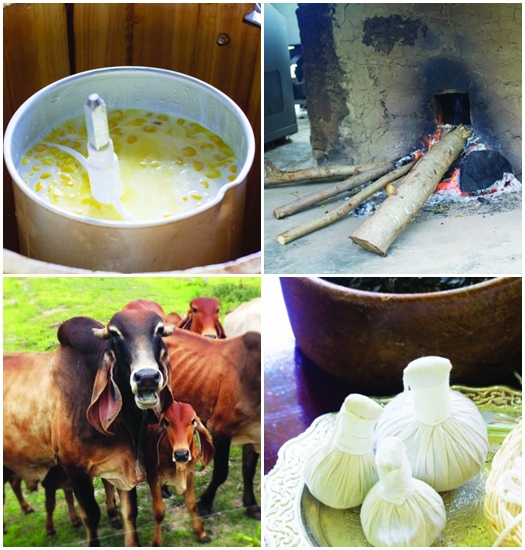
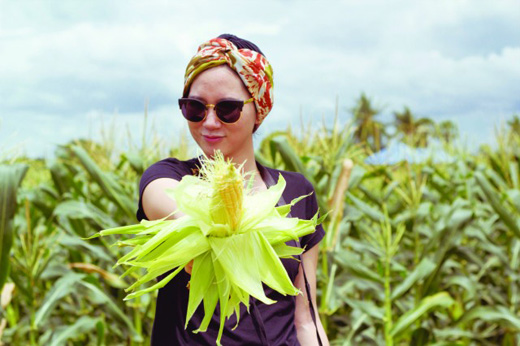
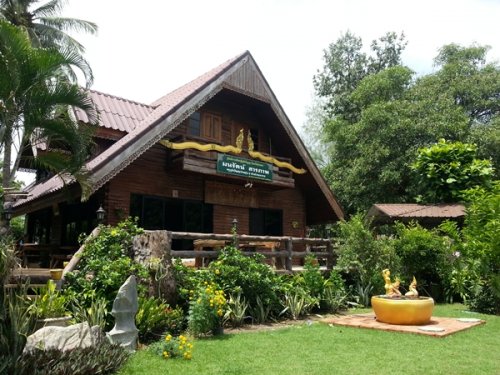
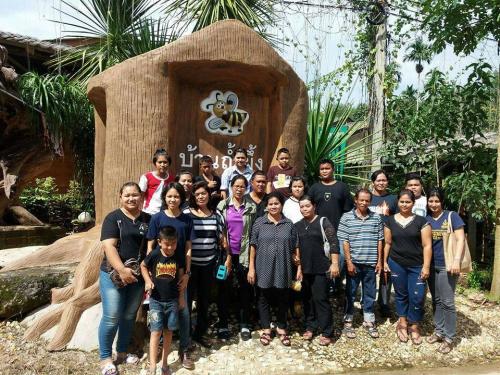
Rai Khun Mon is a mixed agricultural plantation, organic vegetable garden and a factory to process various products such as corn milk, vegetable juice, banana/jackfruit dried. Krayasart coated with vegetable juice, corn Meatballs, corn milk ice cream, healthy homeopathic food and a learning center for Thai wisdom on an area of ​​150 rai with modern machinery

Tourism program
Learn activities based on various bases.
1. Corn milk production base
2. Corn milk ice cream production base
3. The base for collecting fresh corn from the field
4. Sesame oil extraction base
5. Wood vinegar extraction base and Iwate charcoal furnace
6. The base for making a compress
7. Earth house

Other attractions along the route (with distance/km)
River Kwai Bridg, Kanchanaburi War Cemetery, a distance of 25 kilometers
Wat Tham Suea (Tiger Cave Temple), a distance of 30 kilometers
Giant Raintree, a distance of 30 kilometers

Community enterprise products
Corn milk, sesame oil
Vacuum baked bananas
Source
Thailand Tourism Directory
Recommended
Entrance fees
• Entrance fees: Non-fee
• Remark : -
Review (0)
0
จาก 5.0
Availability
Value
Service
Relate Agritourism
Panan garden has many types of fruit planted there, including rambutan, mangosteen, longkong, durian. The cost of visiting Panan garden during May - June, when the orchard is full of fruit is 200 baht per person (price subject to change). In addition, there is also accommodation in the orchard.
Rayong
Ban Rai Chaisuri is at Si Bun Rueang Subdistrict, Mueang, Mukdahan. It is a learning center for a career according to the sufficiency economy. This place is available for the general public and tourists to learn about various agriculture to apply for a career.
Mukdahan
King Bhumibol Adulyadej (King Rama IX) foresaw the significance of plant genetic conservation prior to a recognition of the terms “Biological Diversity” and “Conservation” in Thailand. During the trip to Klai Kang Won Palace, A. Hua Hin, Prachuap Khiri Khan Province in 1960, he passed through A. Tha Yang, Phetchaburi Province and noticed many Yang Na trees (Dipterocarpus alatus). Therefore, he had royal words to collect the seeds to plant at Phra Tamnak Piam Suk, Klai Kang Won Palace, and grow the seedlings at Royal Chitralada Projects to study. In 1985, King Rama IX gave a royal word to conserve jackfruit tress around the Grand Palace and initiated the plant conservation project in the palaces by tissue culture. Later in 1986, he had the royal idea to conserve and breed rattan palms and arrange the herbal garden in Royal Chitralada Projects area. Her Royal Highness Princess Maha Chari Sirindhorn carried on the plant conservation project by having the royal idea and asked Lord Chamberlain to carry out plant conservation project in June 1992, when the seed gene bank was formed, and study the preservation of non-industrial crops under the royal thought framework. In 1993, Mr. Sujin Phunikom, the Assistant Subdistrict Headman of Salui and Tha Sae District, Chumporn Province, and his group, cooperated with the Director of Ultra Products Co., Ltd. and the agriculturists in Chumporn Province to establish plant conservation project at the public area located at Moo.6, Salui District (presently Moo. 5 and 6, Salui District, and Moo.4 and 7, Song Phi Nong District). At the same time, the Royal Chitralada Projects was looking for the area to set up the Plant Genetic Conservation Project Under The Royal Initiative of Her Royal Highness Princess Maha Chari Sirindhorn. Subsequently, Royal Chitralada Projects represented by Professor Prachid Wamanont (the Consultant) and the team met with Chumporn Governor (Mr. Prayoon Promphan) to discuss about the project. The first five years, the project was named “Plant Conservation and Development Project Under The Royal Initiative of Her Royal Highness Princess Maha Chari Sirindhorn, Chumporn Province”. Chumporn Provincial Agricultural Extension proposed the project for the approval from Chumporn Governor and submit the project documents to the Director of Royal Chitralada Projects to respectfully inform to Her Royal Highness Princess Maha Chari Sirindhorn on 26 April 1993. Moreover, Plant Conservation and Development Project was integrated with the royal plant genetic conservation project, which Dr. Pisit Wora-urai was a Chairman. The executives meeting on 9 July 1997 had the resolution to change the project’s name from “Plant Conservation and Development Project Under The Royal Initiative of Her Royal Highness Princess Maha Chari Sirindhorn, Chumporn Province” to “Plant Genetic Conservation Project Under The Royal Initiative of Her Royal Highness Princess Maha Chari Sirindhorn”
Chumphon
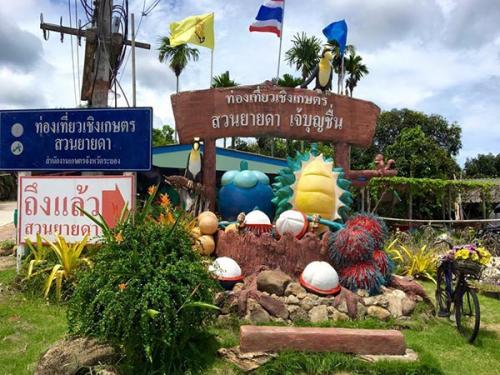
Yai Da Garden - Jay Boonchuen is a mixed fruit orchard. There are touring activities in garden buffet which is collecting the entrance fee to the garden, the price is 200 baht per person, you can eat and sleep all day with papaya salad buffet. There is a tour group service, dining in the garden. There are fried durian products and durian durian from Yai Da garden. It can be made by yourself like Secret recipe, crispy, delicious, with real Rayong shrimp paste. traditional do-it-yourself and selling fresh fruit Tourism program - December - January Come see the durian flowers bloom and see how to pollinate durian, rambutan and salak - February - March is the season of sweet maprang and mayongchit (Sweet yellow Marian plum) - April - June is the time when the fruits are most ready. Fruit buffet activity Route links to other attractions (with distance/km) - Mae Ramphueng Beach 8 km., Suan Son Beach 15 km., Rayong Aquarium 13 km., Taphong Fruit Market 6 km., Pier to Koh Samet 12 km. Community Enterprise product Processed agriculture product, fried durian, good quality shrimp paste and fruits.
Rayong
Sufficiency Economy Philosophy House is a learning center of the new agriculture theory. Inside the integrated garden, is planting vegetables for household consumption adhering to the sufficiency economy philosophy of King Rama IX. It is also the pilot model of growing rice berry in the 400 plastic tanks that results in the 20 tanks of paddy, which is sufficient for consumption all year round. Later, numbers of villagers and foreigners visit this place. The lecturer is available to provide knowledge about the SEP to the students and interested people.
Chumphon
Visiting the garden and eating fruits such as durian, rambutan, mangosteen, and longkong. - Ecotourism activities at the Huai Kha Khaeng buffer zone - Nature Trail Tourism Program: 1. Watching the integrated agro tourism, such as an orchard of guava, Wong Bo lime and fresh mulberry. 2. Visiting the orchard and eat quality fruits such as durian, rambutan, mangosteen, and longkong. 3. Ecotourism at the Huai Kha Khaeng buffer zone 4. Seting up a tent to relax at Huai Nam Ring Reservoir in the area of Huai Kha Khaeng buffer area The direction that links with other attractions: - Paying homage to Luang Por Sema at Wat Pa Sak, which is a local monk of Lan Sak District, a distance of 5 kilometers. - Visiting Huai Kha Khaeng National Park, a distance of 12 kilometers. - Hup Pa Tat, a distance of 10 kilometers. - Samo Thong Hot Spring, a distance of 12 kilometers.
Uthai Thani
1. It is a learning center for the Garden of Eden, organic agriculture, sufficiency economy. 2. Making biogas for household use 3. Making organic fertilizer and making bio-fermented water 4. Using water buffalo to plow into a traditional way of life 5. Damping and restoring forests for water sources (forest planting) 6. Making pork pits, buffalo pits, chickens, etc. 7. Growing organic vegetables and organic fruits (mixture) 8. Fisheries
Chiang Rai
Suphanburi Banana Conservation Center: It is a sufficiency agricultural community enterprise, responsible for the conservation of rare banana species in Thailand; and it has collected up to 108 banana species, especially the species of Suphan Buri itself.
Suphan Buri
There are no charges for visiting Bhumirak Dhamachart Centerm except if you come in groups and need to participate in the activities that the Center has arranged. Here is an excellent learning source, which provides you understanding of the meaning of the word “sufficient” and how to use resources to gain the most benefits and appreciate its value. The walk around this place is in a circle, starting from the Northern Zone to be excited with the planting of various types of bamboo in both ways as well as the prettiness of the bamboo bridge, the bamboo house near the lotus pond, and the bamboo toys. It is exhibited in this way so that we will know about the many benefits of bamboo, including the making of the water dripping trough for watering the trees and soil to replace people; walking up the small mountains to learn about the wild mountain; hydraulic ram pump is to use water to compress the water to the highland instead of using the water pump, wet fire break system, benefits of vetiver grass, and how to build the check dam. Then, walking though the Central Zone to learn about New Theory Agriculture for the farmers to gain benefits from their own land to its value; learning how to build the soiled house and many types of herbs. After that, walking though the Northeastern Zone to visit the rice bank; learning about the rice milling and how to raise the livestock, in which huge cows can be seen in the stalls; how to make compost for own use so that there is no need to buy chemical fertilizer, and learn about Hom Din, which is how to bring back to good soil for farming by covering the land. But how to do that? It is better to learning by yourself. Lastly, going into the Southern Zone to look at how to burn charcoal from bamboo; how to make Biodiesel, and learn about Kaem Ling Project. Moreover, throughout the Center, I have seen many big and small watercourses along the way. There are pools, agricultural beds to grow crops, Chai Phatthana Hydraulic Turbine, the growing of vetiver in water, and many other things. This is the end of the walk where we have received knowledge and enjoy an untiring walk. Walking around, looking, listening, and asking the officer relentlessly just because things that we think ‘we know’ become things we never knew before. This is because we are used to all these projects or theories but we have never practiced or actually touched. How to travel: From Rangsit intersection, take the direction of Ong Kharak District. Head to use the route of Nakhon Nayok-Nang Rong Waterfall. Pass through Wang Takrai. Before reaching Nang Rong Waterfall for about 2 kilometers, turn right into Khun Dan Prakan Chon Dam Project. Go straight for about 3 kilometers until reaching the traffic circle (with the elephant statues). Go to the right to cross the bridge. When reaching the four-way intersection, turn right and go straight for 200 meters. The Center is on the left-hand side.
Nakhon Nayok
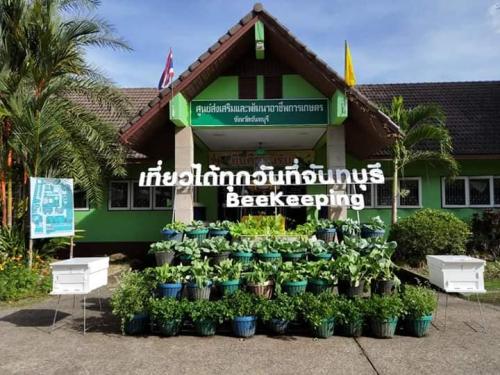
Agricultural Technology Promotion Center for Economic Insects Chiang Mai Province Established in 1980 It is an agency under the Department of Agricultural Extension. Ministry of Agriculture and Cooperatives It plays a major role in research studies. Test and apply economic insect farming technology Promote and transfer economic insect culture technology as a center for development, production, expansion and distribution of economic insect species, as well as providing basic product quality inspection services and diagnosis of diseases and pests of economic insects to farmers and interested parties. It is also a tourist attraction. Agribusiness that is open to both Thai and foreign tourists to get to know and learn about the life of bees and important economic insects of Thailand. Each year, both Thai and foreign tourists visit to study work and travel to the learning points that the center has exhibited, such as learning points on beekeeping, bee breeding, burrow bee, cricket, lac, queen bee, and product processing. and also provide “Honey Shop” product display and distribution point where tourists can watch, taste and buy real, good quality honey and other processed products. of community enterprises and entrepreneurs Tourism program : Learning point/base interesting activities 1. Breeding bees. Open house for breeding bees. (Acquaintance with bees, life cycle and well-being of bees in the hive) Keeping and maintaining bee health checks collecting nectar from flowers and sap. Preliminary analysis of honey quality. 2.Honey bees Wild bees make money. (Get to know the burrowing bees and natural nest building. Traditional poaching beekeeping techniques Modern honey beekeeping Protecting against the pests of honey bees Techniques for collecting good quality honey 3. Chan Rong Open House Chan Rong (Get to know the amazing mini bee, the best pollinator). propagation Nectar, pollen and resin collection behavior of saplings Making resin extracts and their uses 4. Crickets Crickets are the world's reserve protein food source. Commercial cricket species Standard farming techniques and management Processing crickets as food Learning point/base interesting activities 5. Shellac: Get to know lac insects/life cycle and benefits. Transplanting plants for lac culture farming techniques Care and harvest Technology for protection and nursery of lac species during the dry season 6. The queen bee opens the experience of finding the queen bee queen in the hive. birth of queen bee The Great Duties of the Queen Bee Techniques for cultivating queen bees 7. Processed products Watch/Taste/Touch A variety of bee products, natural gifts. The benefits of bee products Tips for buying honey Processing bee products into products for daily use Route links with other attractions: - Chiang Mai Night Safari Night Zoo, distance 750 m. - Royal Park Ratchaphruek, a distance of 1 km. - Wat Inthrawat (Wat Ton Kwen), a distance of 2.5 km. - Wat Phra That Doi Kham, a distance of 4.4 km. - Baan Tawai Handicraft Center, a distance of 10 km. - Wiang Kum Kam, a distance of 11 km.
Chiang Mai
Phra That Kong Khao Noi is located in the rice fields of Tambon Tat Thong; it is an old chedi in the Khmer period, built in the 23rd-25th Buddhist century, corresponding to the late Ayutthaya period. It is located in the area of Wat Phra That Kong Khao Noi which was originally just a rice field in Tambon Tat Thong Phra That Kong Khao Noi is a brick and cement chedi. The shape is strange from the general pagoda is characterized as a rice hull. The Phra That is a rectangular chedi with three wooden indented corners. The square base is 2 meters wide on each side and raised about 1 meter in height. Next to this part is the top of the chedi, which is gradually approaching each other, while the outer peak of Phra That Kong Khao Noi is surrounded by a brick wall measuring 55 meters in size. In addition, behind the relics there is a Buddha image made of bricks. The villagers regarded it as very sacred. And in the fifth month, people come to bathe the Buddha image and cover it with gold. It is believed that if this were not done, the rain would have dried up that year. Also in the area of Ban Tad Thong, the Fine Arts Department has excavated the stories of prehistoric humans by discovering human skeletons in prehistoric times and painted utensils in Ban Chiang style
Yasothon